Floor Plan Marketing: How a Simple Layout Can Land You More Bookings
Floor plan marketing is just a fancy way of saying you’re using your property's layout as a visual sales tool. It’s not just about showing what the space looks like, but how it all connects, giving potential guests the confidence they need to finally click "Book."
Why Floor Plans Are a Must-Have for Modern Listings
I used to think my professional photos were enough. They were gorgeous, but I was still fielding the same questions over and over. "Is the second bedroom next to the living room?" "How do you get to the patio from the master suite?" The answers felt obvious to me, but clearly, my listing was missing a key piece of the puzzle.
That’s when it clicked for me. Pictures show the style, but a floor plan tells the story. This simple visual has become an absolute cornerstone of my marketing strategy, and honestly, it should be for you, too.
Building Trust Before They Even Book
A stunning photo gallery creates that initial spark of desire, but a floor plan builds something much more durable: trust. When a guest can see the exact layout, you instantly remove the guesswork and set clear expectations. They stop seeing a collection of pretty, disconnected rooms and start seeing a home.
That mental shift is huge. It lets them start planning their trip right there on your listing page.
- Families with little ones can quickly confirm the kids' room is right next to the master bedroom.
- A group of friends can map out who gets which room and check for bathroom access without any awkward back-and-forth.
- Someone working remotely can spot a quiet nook for video calls, away from the hustle and bustle of the kitchen.
This isn’t just a nice little extra anymore; it’s what savvy travelers have come to expect. Think about it: 98% of home buyers say floor plans are a critical part of their online search, and that expectation has absolutely carried over into the vacation rental space. If you want a deeper dive, these real estate marketing statistics show just how vital visuals have become.
The real magic of a floor plan is how it answers questions before a guest even has to ask. It smooths out the booking process, turning a hesitant browser into a confident guest.
When you provide this level of clarity, you’re showing respect for their time and their decision. You're giving them all the pieces to feel completely sure about their choice, which is the first step to a five-star review before they even walk through the door.
Impact of Visuals on Guest Perception
It's helpful to see how different visuals work together to paint a complete picture for your guests. Each one answers a specific question and builds confidence in a unique way.
| Visual Element | Guest Question Answered | Impact on Trust |
|---|---|---|
| Professional Photos | "What does the space look and feel like?" | High - Sets expectations for style and quality. |
| Floor Plan | "How does the space connect and flow?" | Very High - Eliminates surprises about the layout. |
| Virtual Tour | "Can I 'walk through' the property myself?" | Very High - Offers immersive, self-directed exploration. |
| Annotated Photos | "What are the specific features and amenities?" | Medium - Highlights key details and benefits. |
As you can see, while photos are essential for creating initial appeal, floor plans and virtual tours are the heavy lifters when it comes to building the trust needed to secure a booking. They provide the concrete, logical information that complements the emotional pull of great photography.
Creating a Floor Plan That Secures Bookings
Alright, we’ve covered why you absolutely need a floor plan. Now for the fun part—actually making one.
When I first dipped my toes into this, I was convinced I'd need an architecture degree or some wildly expensive software. Turns out, that couldn't be further from the truth. You can knock out a professional, easy-to-read floor plan with nothing more than the smartphone in your pocket.
My own floor plan marketing journey started with one simple rule: keep it clean and easy for guests to understand. We’re not building a house here, so forget about complex blueprints. The goal is to create an inviting map of your home, not a technical document for a contractor.
Getting Started with Simple Tools
I’ve played around with a bunch of tools over the years, and honestly, the simplest ones are usually the best. Apps like CubiCasa are a game-changer. You just scan a room with your phone’s camera—it takes about five minutes—and it spits out a surprisingly accurate layout. No tape measures, no guesswork.
Once you have that basic outline, the real magic happens in the details you add. This is how a simple diagram turns into one of your most powerful booking tools.
A floor plan isn't just about showing walls and doors. It's about showcasing the experience and functionality of your space, helping guests mentally move in before they even arrive.
To make your layout truly work for you, you need to add annotations that answer a guest's questions before they even think to ask them. Think of it as a visual FAQ for your property.
Essential Details to Include
Here are the non-negotiable details I bake into every single floor plan. They might seem minor, but they do wonders for building guest confidence and cutting down on those back-and-forth messages.
- Bed Sizes: Label every bed clearly—"Queen," "King," "Two Twins." This is probably the number one question I get from families and groups.
- Doorway Swing Direction: Showing which way a door opens helps people understand the flow of a room and whether their suitcase will get stuck behind the bathroom door.
- Window Placement: Mark all the windows. This immediately gives a sense of how much natural light a room gets and hints at potential views.
- Key Furniture: Don't clutter it up, but definitely include the big stuff: the sofa, the dining table, and any dedicated workspaces. This helps guests visualize themselves living in the space.
This simple graphic perfectly illustrates how a guest's brain works when they see a floor plan in a listing.
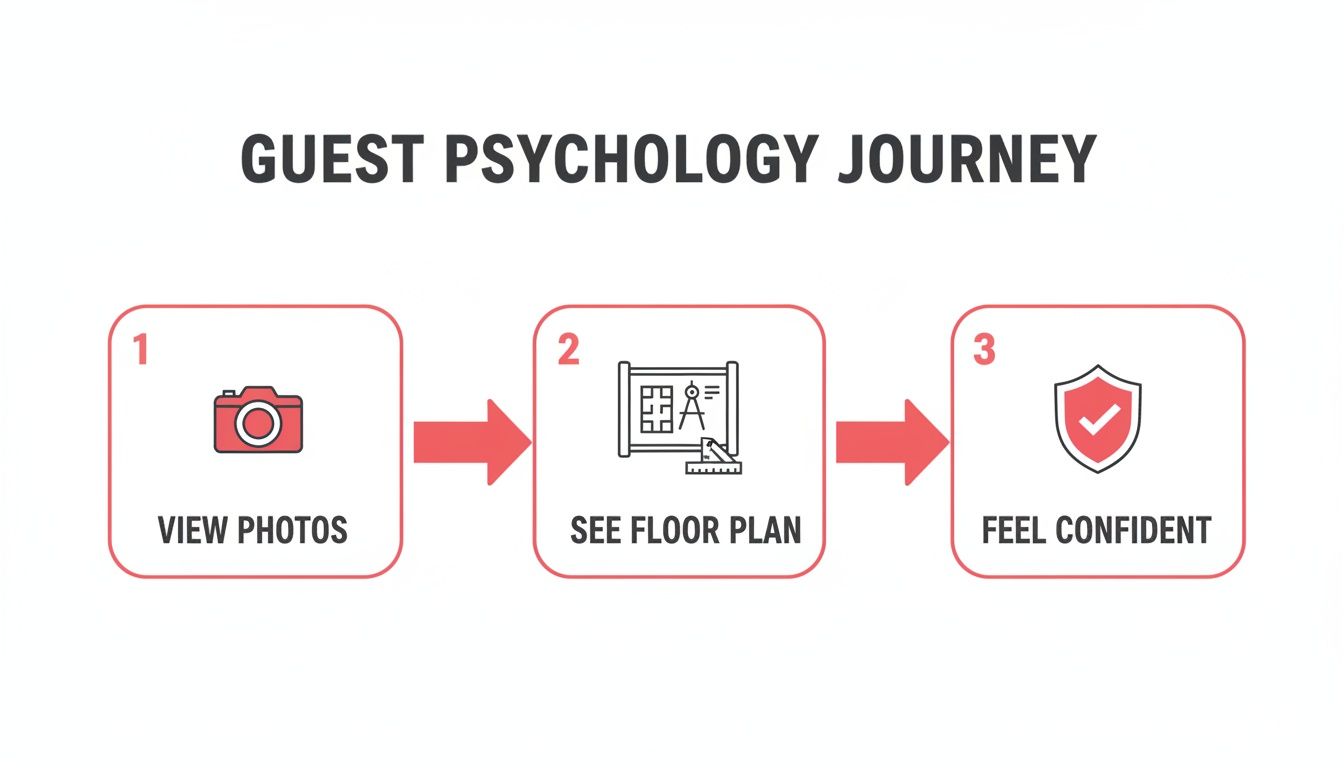
It’s a natural progression. The photos grab their attention and create desire, but it's the floor plan that provides the logical reassurance they need to hit that "Book Now" button.
By adding these simple details, you’re telling a story of comfort and convenience that makes your property the obvious, no-brainer choice. And remember, a great floor plan works hand-in-hand with your photos. To make sure your pictures are pulling their weight, check out these great tips on how to edit real estate photos.
How to Optimize Your Floor Plan for Maximum Impact
A great floor plan is so much more than a simple map; it’s a powerful marketing asset. Once you have the basic layout, a few thoughtful tweaks can turn it into an absolute booking machine. Let’s dive into the details that truly make a difference.
First, let’s talk file formats. This might sound technical, but getting it right is simple and incredibly important. You need a file that looks sharp and loads fast on any device. For listing platforms like Airbnb and Vrbo, a high-quality JPG or PNG file is your best friend. These formats maintain crisp detail without being so large they slow down your listing—a surefire way to lose a potential guest's attention.
Most floor plan apps export directly to these formats, so it’s usually just a click away. Just be sure to avoid heavy PDFs or other document types. They often don't display properly in the photo gallery and create a clunky experience for the user.
Going Beyond Basic Labels
This is where your floor plan marketing really comes to life. Instead of just labeling rooms "Bedroom 1" and "Kitchen," you need to start thinking like a guest. What small details would make them feel confident and excited about the space? It’s all about adding strategic annotations that sell the lifestyle your property offers.
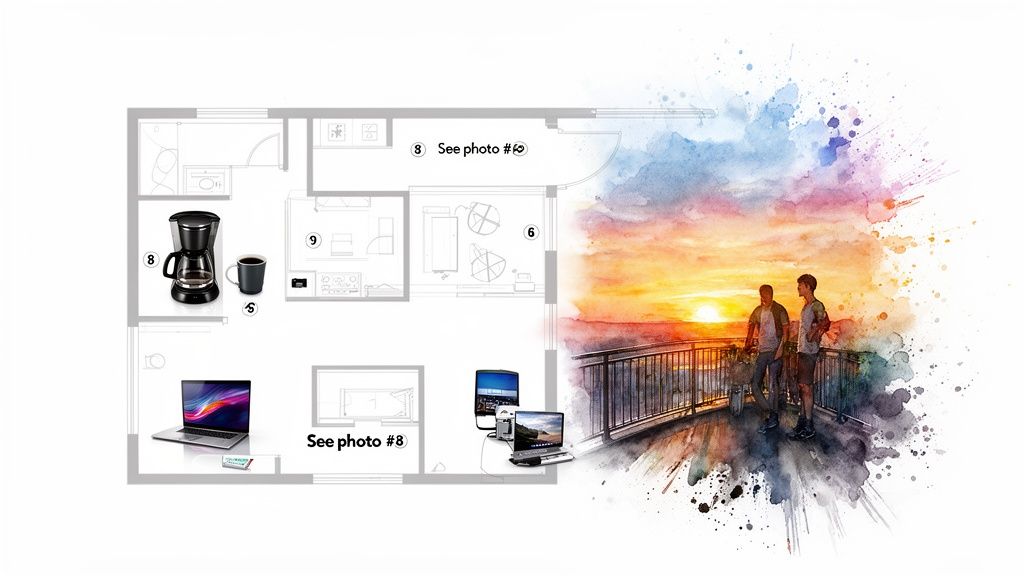
I like to call these "feature callouts." They’re little notes that highlight amenities and unique perks that photos alone might not capture.
- Highlight the Views: Add a small note like, "Balcony with Sunset Views."
- Showcase Amenities: Use a coffee cup icon next to the coffee maker or a simple label like "Fully-Stocked Coffee Bar."
- Point Out Functionality: Designate a quiet corner as a "Dedicated Workspace with High-Speed WiFi."
These small additions don’t clutter the layout; they enrich it. They help a guest visualize their morning coffee or an important work call, connecting the practical layout to their personal needs and desires.
Your annotations should tell a story. They transform a 2D drawing into a preview of the guest’s experience, highlighting the comfort and convenience that make your rental special.
Connecting Your Floor Plan to Your Photos
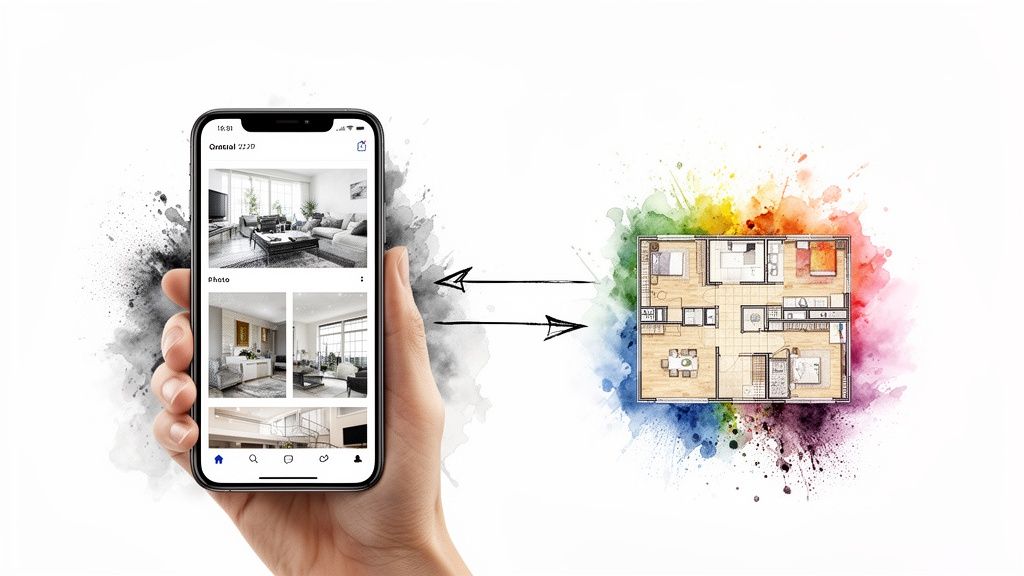
Here’s a simple trick I’ve used that has a huge impact: create a direct link between your floor plan and your photo gallery. This tactic bridges the gap between the schematic layout and the real-life feel of the rooms, creating a cohesive and interactive experience for anyone viewing your listing.
It’s as easy as adding a small text note right on your floor plan. For example, on the kitchen area of your layout, you can add a simple annotation: "See Photos 8-12 for kitchen details." In the primary bedroom, you might add, "See Photo 15 for en-suite bathroom."
This simple cross-referencing technique guides guests through your listing, encouraging them to spend more time exploring your property. It connects the dots for them, making the space feel familiar and helping build the confidence they need to hit "book." Of course, the visual appeal of your photos is critical, so if you're handling them yourself, consider working with a professional real estate photo editor to ensure they really pop.
Strategic Placement Within Your Rental Listing
You’ve got the perfect floor plan. It’s clean, informative, and ready to answer a guest’s unspoken questions. So, where on earth do you put it? This is a question I see hosts get wrong all the time.
The most common mistake is burying your floor plan at the very end of the photo gallery. I get it, it feels like an extra detail. But sticking it at the end makes it an afterthought, and most potential guests will never even scroll that far. Your floor plan isn't a bonus feature; it's a core selling tool.
Good floor plan marketing is about psychology. You need to show them the layout right when they’re moving from "just looking" to "hmm, could this work for us?"
Finding the Sweet Spot in Your Photo Gallery
After years of A/B testing my own listings and analyzing guest behavior, I’ve found the perfect spot. The floor plan should be the 5th or 6th image in your gallery, right after your most stunning "hero" shots.
Think of it as telling a visual story about your property.
- Photos 1-4 (The Hook): Lead with your absolute best pictures. I'm talking about the money shots—the sun-drenched living room, the pristine kitchen, the inviting master bedroom, and a killer view or outdoor space. These first few images create an emotional connection.
- Photo 5 (The Context): Bam. Just as a guest is thinking, "Wow, this place looks amazing," you hit them with the floor plan. This is the moment it all clicks into place. They can now visualize how all those beautiful rooms they just saw connect.
This one-two punch is incredibly effective. You hook them with emotion, then immediately follow up with the logic they need to feel confident. It empowers them to keep scrolling, but now with a mental map of your home. They’re no longer just looking at photos; they’re mentally walking through the space.
By placing the floor plan early, you anchor the guest's understanding of the property. Every subsequent photo they view adds another layer of detail to the mental map you've already provided.
Why This Placement Strategy Is a Game-Changer
Positioning your floor plan in this prime spot does more than just show the layout—it keeps people on your listing longer. When guests can see how the puzzle fits together, they can explore with purpose.
They'll see the photo of the second bedroom and know exactly where it is in relation to the kids' room. They'll see the patio doors and instantly understand they lead right off the dining area. This clarity removes doubt and makes the decision to book that much easier.
When you combine beautiful photos with a clear, easy-to-read floor plan, you’re giving guests everything they need. And if you really want to take it to the next level, integrating visuals like 3-D photography for real estate can make your listing practically irresistible.
How to Know if Your Floor Plan is Actually Working
As a host, you're already obsessed with the numbers. Occupancy rates, average nightly rate, review scores—it's all part of the game. So after you've gone to the trouble of creating a great floor plan, how do you know if it's pulling its weight?
You need to connect the dots and see if your floor plan marketing is actually delivering a return. The good news is you don't need a fancy analytics suite. The most powerful proof is often the most straightforward, blending hard data with the kind of feedback you get every day.
I'm a huge fan of simple, real-world tests. You don’t need to be a data scientist to figure out what's resonating with guests.
The Simple Before-and-After Test
The most direct way to measure your floor plan’s impact is by looking at your booking conversion rate. In plain English, that’s the percentage of people who see your listing and actually book it. A higher conversion rate means your listing is more persuasive.
Here’s a simple test I’ve used myself:
- Get Your Baseline: First, dig into your booking data for the 30 days before you added the floor plan. Just divide the number of bookings you got by the number of views your listing received to find your conversion rate.
- Go Live: Now, add your new floor plan to the listing. For the next 30 days, try not to change anything else significant, like your pricing, main photo, or description.
- Compare the Numbers: After a month, calculate your new conversion rate. Did it budge? Even a bump of a few percentage points can mean a serious increase in revenue over a year.
The whole point here is to isolate one variable: the floor plan. By keeping everything else the same, you can be pretty confident that any lift in bookings is thanks to your new visual.
Don't Overlook the "Soft" Wins
Numbers are great, but don't ignore the feedback you get from guests—or the lack of it. This qualitative stuff is often just as revealing as any metric on a dashboard. These are the wins you can feel.
Keep an eye out for these subtle but powerful changes:
- Fewer questions about the layout. Are you getting a lot less of the "Is the master bathroom attached to the bedroom?" or "Are the kids' rooms on a different floor?" type of messages? That’s a huge sign your floor plan is clarifying things upfront.
- More direct bookings. You might notice people just book without asking a single question. They see the listing, they get it, and they're confident enough to commit on the spot.
- Shout-outs in your reviews. This is the ultimate validation. When a guest writes something like, "The floor plan was so helpful for our family to figure out sleeping arrangements!" you've hit a home run. You’ve not only made a sale but genuinely improved their experience.
These signals are proof that your floor plan isn't just a pretty picture. It's an active tool that builds trust and makes booking your place a no-brainer.
So, What's the Real Takeaway Here?
Let's be real for a moment. Tossing a floor plan onto your listing isn't just about ticking another box in your marketing checklist. It's a fundamental shift in how you communicate with potential guests, one built on being transparent and respecting their need to make an informed choice.
Think about it. In a sea of gorgeous but sometimes disjointed property photos, clarity is the one thing that will make you stand out. Good floor plan marketing is all about erasing any hesitation a guest might have. You're getting ahead of their questions before they even have a chance to ask them.
When you pair incredible photography with a clear, easy-to-understand floor plan, you’ve created a one-two punch that builds instant trust. That’s how you get a real competitive edge.
This simple step does something powerful: it turns a gallery of pretty rooms into a space someone can actually picture themselves in. It’s a small effort on your part, but it sends a huge message about the kind of host you are.
Ultimately, this is your chance to start delivering that five-star experience long before a guest ever walks through the door. You’re not just selling a place to sleep; you're selling the confidence that they’ve found the perfect spot for their trip. And that feeling of certainty? That’s what turns one-time bookers into repeat guests.
Got Questions About Using Floor Plans?
I get it—diving into something new always brings up a few questions. Over the years, I've heard the same handful of concerns from other hosts who are on the fence about floor plan marketing. Let's clear those up right now so you can move forward with confidence.
Do I Really Need Professional Software?
Absolutely not. Please don’t get bogged down here. There are tons of user-friendly apps out there made for people with zero design experience. Remember, the goal is clarity for your guest, not a construction-grade blueprint for a contractor.
I've had a lot of success with a few simple tools:
- MagicPlan: It's fantastic for getting quick scans and measurements just by using your phone's camera.
- RoomSketcher: This one gives you a bit more creative control, letting you add furniture to show the layout in action.
- Canva: You might be surprised, but it's incredibly effective for turning a basic hand-drawn sketch into a clean, professional-looking layout.
The best tool is the one you’ll actually use. Simplicity almost always wins out.
Will a Floor Plan Make My Small Space Look Even Smaller?
This is probably the most common fear I hear, but a good floor plan actually does the exact opposite. It gives your space much-needed context and helps set realistic guest expectations, which is the secret to avoiding disappointment when they walk through the door.
Think of it this way: instead of a guest imagining your studio is cramped, you're showing them just how functional and well-laid-out it is. By clearly marking dimensions and clever furniture placement, you're highlighting the utility of every square foot. That builds serious trust.
Where in My Photo Gallery Should It Go?
Whatever you do, don't bury it at the end! After playing around with this on my own listings, I've landed on the sweet spot: somewhere within the first 5 to 7 photos.
Lead with your absolute best "hero" shots to create that initial emotional spark. Then, bring in the floor plan to provide the logical context they're craving.
This one-two punch works wonders. You hook them with stunning images of the living room, kitchen, and main bedroom, and then the floor plan immediately helps them connect all the dots. It keeps them engaged and scrolling because they can now build a clear mental map of your property.
Ready to make your listing photos pop and perfectly complement your new floor plan? rental.photos delivers professionally polished images in under 24 hours. Our human-reviewed editing process ensures your photos look natural and inviting, helping you stand out and secure more bookings. Get started today at https://rental.photos.
Ready to have professional photos?
Our team transforms your existing rental photos into stunning, high-converting images that bring you more bookings. No photoshoot required. 100% refund guaranteed.
Improve My Photos →