A Human Guide to 360 Virtual Tour Pricing for Rentals
Let's get right to it. For a standard rental property, you can expect a professional 360 virtual tour to cost anywhere from $350 to over $1,000. The final price tag really hinges on your property's size, the cool features you want to add, and the pro you hire to put it all together. This guide will unpack what goes into that final number.
So, What Does a 360 Virtual Tour Actually Cost?
When you’re trying to budget for a 360 virtual tour, it helps to think of it like buying a car. You could go for a dependable, no-frills model that gets the job done just fine. Or, you could invest in a premium ride with all the bells and whistles. Both get you where you need to go, but the experience—and the impression it leaves—is worlds apart.
This is your starting point for understanding the numbers before we dive into what makes them tick up or down. The pricing spectrum for 360 virtual tours is surprisingly wide. It covers everything from a scrappy DIY approach that might only cost you time and less than $100 for some software, all the way to a high-end professional service that delivers a polished, immersive experience for your future guests.
A Look at Typical Price Ranges
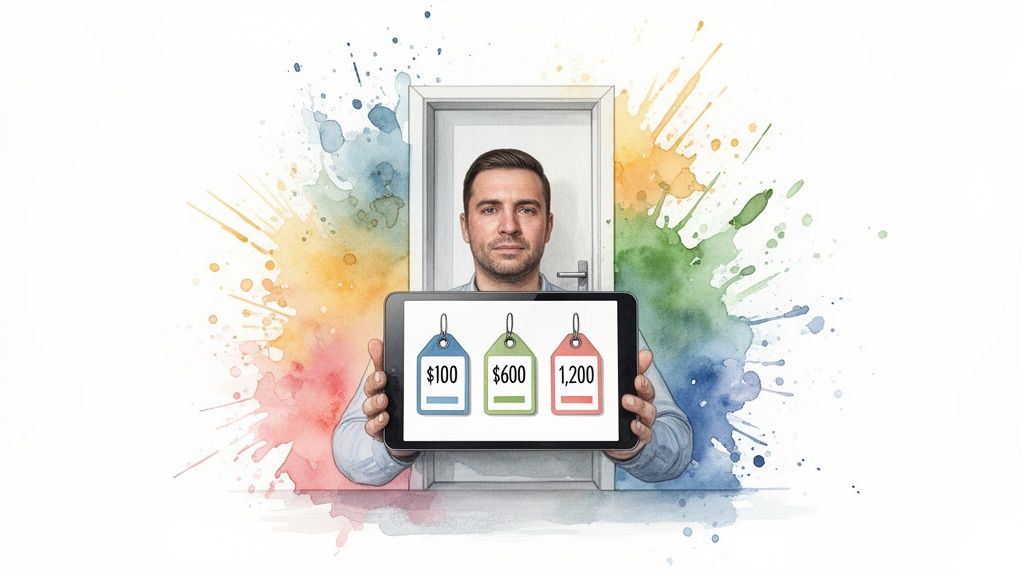
The price can swing quite a bit depending on the property. For most residential rentals, you’re looking at a range of $350 to $1,000 for standard scanning and production. But if you have a larger or more complex commercial space, like a restaurant or an office, the price often jumps to between $750 and $2,000 simply because there's more ground to cover. You can find more insights on virtual tour cost breakdowns to see how these numbers are calculated.
The key isn't just to stare at the price, but to really understand what you're getting for your money. A higher price often means more detailed scans, interactive features, and professional hosting—all things that can directly lead to more bookings.
This isn't just another expense to track in a spreadsheet; it's a real investment in your business. In a packed rental market, a top-notch virtual tour is one of the best tools you have to:
- Stand out from the crowd: It instantly makes your listing feel different from the thousands that rely on static photos alone.
- Attract smarter guests: People can see for themselves if the space fits their needs, which cuts down on my back-and-forth questions and mismatched expectations.
- Close more bookings: A great tour builds trust and gives potential guests the confidence they need to hit that "Book Now" button.
Getting a handle on the real cost is the first step toward making a smart decision that pays off for your rental business.
How Different Pricing Models Work
When you start shopping around for a virtual tour, you’ll quickly find that pricing isn't always cut and dry. Everyone seems to have a different way of calculating the final cost, which can be confusing if you don't know what to look for.
Think of it like choosing a cell phone plan. Some people prefer a simple, all-in-one monthly bill, while others want a pay-as-you-go option. The key is to understand the common pricing structures so you can find one that actually fits your property and your budget, without any nasty surprises.
Let’s break down the three most common ways providers charge for their services.
The All-Inclusive Per Property Model
This is probably the most straightforward and popular model you'll see. With a per property or flat-fee structure, a photographer gives you a single, all-in price to create the entire virtual tour for your rental. This quote usually covers everything from the on-site photoshoot and editing to the final, ready-to-use tour.
It’s the all-you-can-eat buffet of virtual tours. You pay one price and get everything you need for that specific property, no matter how many individual photos it takes to capture the space. If you like predictability and hate hidden fees, this is the model for you. You know exactly what you’re paying from the get-go, making it a breeze to budget for.
The A La Carte Per Scan Model
Another common approach is the per scan or per panorama model. Here, the cost is based on the number of individual 360-degree photos (often called scans or panoramas) needed to build out the tour. The more scan points required to cover your property thoroughly, the higher the price.
This is the pay-as-you-go phone plan of the virtual tour world. It offers a ton of flexibility and can be a great deal for smaller spaces, like a studio apartment where you only need a handful of scans. But be careful—for a larger home with multiple bedrooms, a patio, and a yard, the costs can escalate quickly. A good photographer will give you a solid estimate, but the final bill is definitely more variable than with a flat-fee project.
The Ongoing Subscription Model
Finally, you’ll run into the subscription model. This involves a recurring monthly or annual fee that keeps your tour live and functional. While the initial creation of the tour might be a separate one-time cost, this subscription covers ongoing services like hosting, software access, and support.
Many platforms, especially powerful ones like Matterport, require a hosting plan to keep your tour online. This isn't just an extra fee; it's what ensures your tour remains a live, functioning marketing asset for potential guests to see.
It’s a lot like your Netflix subscription—you pay a regular fee to maintain access and keep everything running smoothly. It's crucial to ask about these fees upfront. Some providers might bundle the first year of hosting into their initial price, but you need to know what those recurring costs will be down the road. This helps you understand the true long-term investment you're making in your property's marketing.
The Key Factors That Shape Your Final Price
Ever wondered why your friend paid $400 for a virtual tour while your quote came in at double that? The final number on a proposal isn’t random. It’s a direct reflection of the work, time, and technology required to bring your specific space to life.
Think of it like commissioning a custom piece of furniture. A simple coffee table will naturally cost less than an ornate, ten-person dining table. The same logic applies here. Once you understand the variables, you can decode any quote you receive and make smarter decisions for your rental property.
Let's pull back the curtain on what truly drives the cost of a 360 virtual tour.
Property Size and Overall Complexity
This is the big one. A cozy one-bedroom apartment is far simpler and faster to capture than a sprawling four-bedroom house with a garden, pool deck, and multiple floors. More space simply means more work for the photographer, both on-site and back in the editing suite.
But it’s not just about square footage. The complexity of the layout matters, too. A property with lots of small rooms, tight hallways, and unique angles requires more careful planning and more individual scans to create a seamless walkthrough. An open-plan layout, on the other hand, is much easier to map out.
The Number of Scans or Panorama Points
Tied directly to the property's size is the number of scans, which are the individual 360-degree photos that act as viewpoints within your tour. Each scan point is a spot where the photographer sets up their specialized camera to capture a full sphere of the environment.
These individual panoramas are then digitally "stitched" together to build the interactive walkthrough. More scans create a smoother, more detailed tour, making guests feel like they’re truly there. But remember, each additional scan adds to the photographer's time and the post-production workload, which bumps up the price.
A good rule of thumb is that more scans equal a higher-quality, more immersive tour, but also a higher final cost. It's a balance between creating a fantastic user experience and staying within your budget.
Add-On Features That Enhance the Experience
Beyond the basic walkthrough, many providers offer powerful add-ons that can make your tour even more compelling. These extras turn a simple viewing tool into an interactive marketing asset, but they do add to the overall cost.
Popular add-ons include:
- Interactive Floor Plans: A 2D or 3D floor plan that shows the property layout at a glance. Users can click on a room to jump right to that spot in the tour.
- Info Tags (Mattertags): Clickable hotspots you can place on specific objects, like a smart TV or a high-end coffee machine. When a guest clicks, a pop-up can show text, photos, or even a video explaining the feature.
- Bundled Professional Photos: Many photographers offer a package that includes high-res still photos pulled directly from the 3D tour. This is a great way to ensure your visual marketing is consistent. Our guide on 3D photography for real estate explains more about how this technology works.
- Virtual Staging: If your rental is unfurnished, some services can digitally add furniture to the tour to help guests visualize themselves in the space.
This chart breaks down the core pricing models that these factors are often built upon.
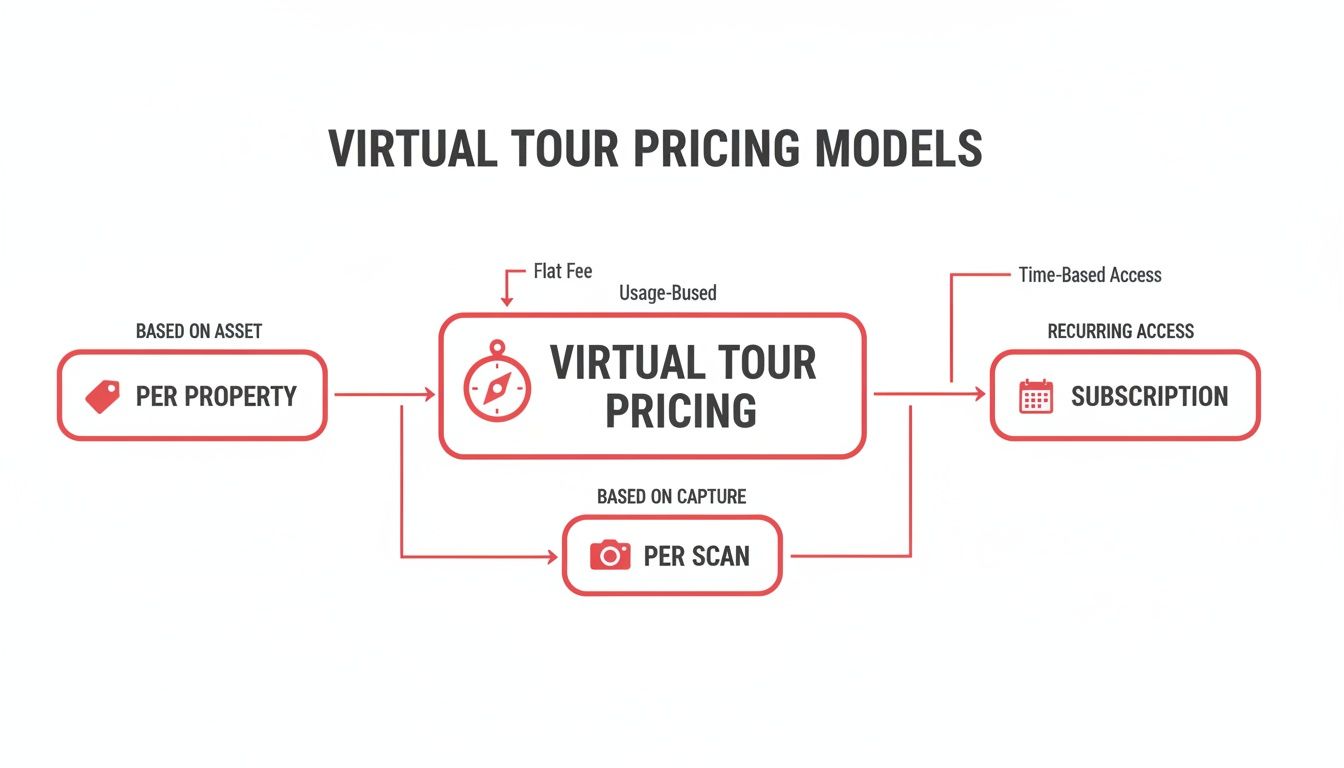
As you can see, while the structures vary, they all ultimately scale based on the amount of work and the features you need.
Ongoing Hosting and Platform Fees
Finally, you can't forget about the ongoing costs. A virtual tour isn’t just a file you can save to your desktop; it's interactive software that needs to live on a server to be accessible online. This is where hosting fees come in.
Many premium platforms, like Matterport, require a subscription to keep your tour active. These fees cover server space, software updates, and the bandwidth needed for guests to view your tour 24/7. These can range from a small monthly fee to a larger annual payment, so always ask your provider about recurring costs. That way, you can factor them into your long-term budget and avoid any surprises down the road.
DIY vs. Pro Tours: An Honest Comparison
So, you’ve reached the big fork in the road: should you roll up your sleeves and tackle this virtual tour thing yourself, or is it time to call in a professional? This isn’t just about money. It’s a decision that affects your time, your brand’s reputation, and the first impression you make on a guest.
The DIY route is definitely tempting. Who wouldn't want to save a few hundred bucks and have total creative freedom? It's a powerful draw. But that path is also paved with its own challenges—think steep software learning curves, hours spent troubleshooting, and the real risk of creating a clunky tour that actually turns people away.
On the flip side, hiring a pro gets you their expertise, high-end gear, and a polished final product that builds immediate trust. Of course, that quality comes with a price tag. Let's break down the pros and cons of each so you can figure out what truly makes sense for your business.
The Case for the Do-It-Yourself Tour
Going the DIY route is an adventure, and for the right host, it can be a rewarding one. The most obvious win is the low upfront cost. Instead of paying a professional’s fee, you’re mainly looking at the cost of a consumer-grade 360 camera and a software subscription. You can often get started for under a few hundred dollars.
You also get total creative control. Every angle, every scan point, every little detail is up to you. If you’re a hands-on person who loves managing every aspect of your property’s image, this is a massive perk. It also means you can update the tour whenever you want—like after a renovation—without having to hire someone again.
But let's be real: creating a tour that looks smooth and professional is a lot harder than it seems. The time commitment is no joke. What might take an expert a couple of hours on-site could easily eat up a full day for a beginner, and that’s before you even touch the editing software. That’s valuable time you could be spending on managing your rental.
The biggest risk with DIY is the final quality. A poorly lit, disjointed, or confusing tour can make your property look amateurish. Instead of building trust, it can erode it, potentially hurting your booking rate more than having no tour at all.
Why Hiring a Professional Pays Off
When you hire a professional, you're buying more than just pictures. You're investing in their experience, their eye for composition, and their access to specialized equipment that costs thousands of dollars—gear that the average host simply doesn’t own. These pro-level cameras don't just take photos; they capture depth data to create a true 3D "digital twin" of your space that's seamless and accurate.
The result is a tour of superior quality. It looks polished and gives potential guests a real sense of confidence. They can move through your property smoothly, without jarring transitions or distorted images. That level of quality signals that you're a serious host who invests in providing a great experience.
Plus, a professional saves you your most valuable asset: time. They manage the entire process, from shooting to editing, and deliver a final tour that's ready to plug into your listings. While they're working, you can focus on guest communication, marketing, or anything else on your plate. The higher initial cost is often balanced out by the time you save and the premium marketing asset you gain.
A professionally made tour is a powerful tool that can lead directly to more bookings and even help justify a higher nightly rate.
DIY vs. Professional Virtual Tour: What's Right for You?
Choosing between DIY and hiring a pro depends entirely on your budget, your technical skills, and how much you value your time. This table breaks down the key differences to help you decide which path is the best fit for your rental business.
| Factor | DIY Virtual Tour | Professional Service |
|---|---|---|
| Upfront Cost | Low. Primarily equipment and software fees. | High. A one-time investment for a premium service. |
| Time Investment | High. Involves a significant learning curve and hands-on work. | Minimal. The professional handles everything for you. |
| Final Quality | Variable. Often looks amateurish without proper skill and gear. | High. Polished, seamless, and builds guest trust. |
| Equipment Used | Consumer-grade 360 cameras with limited capabilities. | Professional-grade cameras (e.g., Matterport) that capture depth. |
| Control | Complete creative control over every aspect. | Collaborative, but the pro leads the creative process. |
| Best For | Hosts on a very tight budget with ample free time and a knack for tech. | Hosts who value their time and want a high-quality marketing asset. |
Ultimately, a DIY tour can be a good starting point if you have more time than money. But if your goal is to create the best possible first impression and maximize your booking potential, investing in a professional is almost always the smarter long-term play.
Thinking About Your Virtual Tour as an Investment
So far, we’ve been talking a lot about the cost of a 360 virtual tour. But to really get a handle on its value, we need to flip the script. A virtual tour isn't just another expense to track; it's a hard-working business asset designed to put money back in your pocket. It's time to stop looking at the price tag and start thinking about the return on investment (ROI).
When you get a quote for, say, $600, it’s easy to second-guess the expense. But what if that $600 paid for itself in just a few months? Let’s connect the dots and see how a great tour can directly boost the revenue from your rental property. It's not just a fancy gadget—it's a smart business move.
From Immersion to Increased Bookings
At its core, a virtual tour is all about building trust. When you let potential guests digitally walk through your property from their couch, you’re wiping away their doubts and giving them the confidence to click "book." This immersive experience has a real, measurable impact on your bottom line.
A compelling tour directly translates to:
- Higher Booking Rates: Guests who can explore every corner of your space feel a stronger connection. That connection makes them far more likely to choose your property over another with just flat photos.
- More Nights Booked: When someone can see for themselves that your property is a perfect fit, they're often inclined to book longer stays. They feel secure knowing it meets all their needs.
- Justification for a Higher Nightly Price: A premium presentation screams "premium property." A professional tour helps you command a higher nightly rate because it does a fantastic job of showing off the quality and value you offer.
This isn't just a hunch; it’s a powerful industry trend. The global virtual tours market is expected to rocket from around $1 billion in 2023 to nearly $18 billion by 2035. This boom is happening for one simple reason: real estate professionals are seeing the results. Properties with virtual tours can sell an estimated 31% faster and fetch up to 9% more in some areas. You can dig deeper into this market growth on 360photographers.gr.
Uncovering the Hidden Financial Benefits
Beyond the obvious boost in bookings, a virtual tour delivers a handful of "hidden" financial perks. These are the quieter advantages that save you time and polish your reputation, ultimately feeding back into more future bookings.
One of the biggest unsung benefits is cutting down on pre-booking questions. When a guest can see the brand of the coffee maker or check the distance from the bedroom to the patio themselves, they don’t need to send you a message. That frees up your time to focus on running your business.
By setting crystal-clear expectations upfront, you lay the groundwork for an amazing guest experience. A virtual tour ensures there are no unpleasant surprises on arrival, which is a secret weapon for earning those all-important five-star reviews.
Think about the long-term ripple effect of consistently great feedback. Better reviews push you higher in search results on Airbnb and Vrbo, giving you more visibility and, you guessed it, more bookings. That initial investment in a tour creates a positive feedback loop that keeps paying you back long after it's done. To take your property's visuals to the next level, check out our guide on 360 product photography for more ideas.
In short, a virtual tour is your tireless, 24/7 salesperson. It presents your property perfectly every single time, answers questions before they’re even asked, and builds the trust needed to turn a casual looker into a confirmed guest.
Smart Ways to Save Money Without Sacrificing Quality
Investing in a great virtual tour doesn’t have to break the bank. With a bit of strategic planning, you can bring down the final cost considerably while still getting that immersive experience guests love. It's all about being a smart shopper—knowing when to bundle services, what to prioritize, and how to get your property ready can make a huge difference.
Let's walk through some practical tactics to make every dollar count. A fantastic tour that drives bookings is completely within reach, even on a smart budget.
Prepare Your Property Perfectly
The single best way to save money? Have your property 100% ready before the photographer even walks through the door. Most professionals charge based on the time they spend on-site. If they're waiting around while you move furniture, stash clutter, or fix a flickering light, that clock is ticking—and so is your bill.
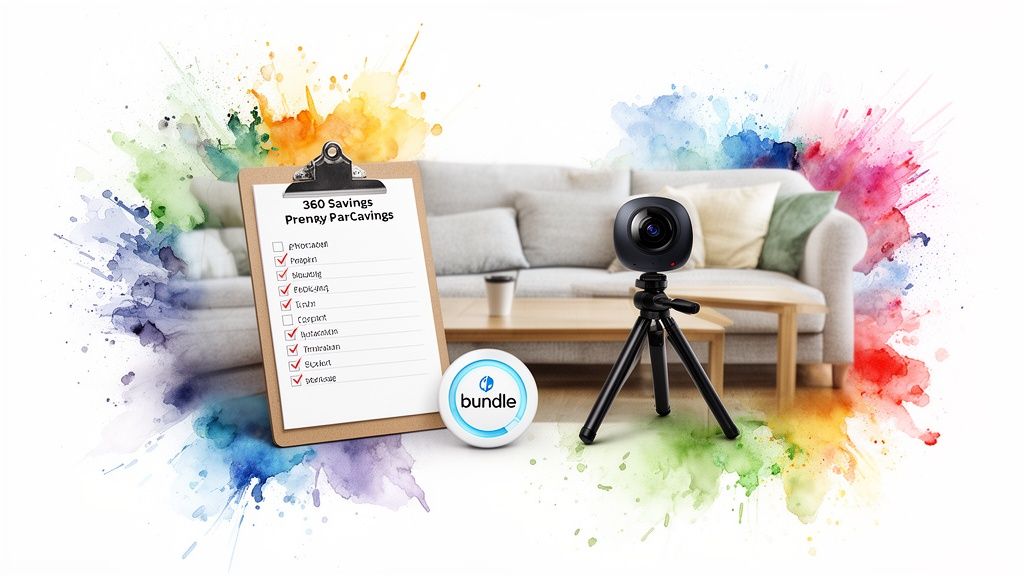
Whip up a simple checklist to go through the day before the shoot:
- Declutter everywhere: Clear off countertops, put away personal items, and hide anything that doesn't add to the scene.
- Clean until it sparkles: Dust all surfaces, vacuum thoroughly, and make sure windows and mirrors are streak-free.
- Do a light check: Replace any burned-out bulbs to ensure the lighting is consistent and inviting.
This bit of prep work can easily shave an hour off the photographer's time, which could put $100 or more right back in your pocket.
Bundle Your Services for Bigger Savings
Your virtual tour is just one part of your visual marketing. You'll also need high-quality still photos and, ideally, a floor plan to give guests a complete picture. The good news is that many photography providers offer these services together in a discounted package.
Instead of booking separate vendors for each task, ask about bundling. It's a win-win situation. You get a consistent, professional look across all your marketing materials, and the provider saves on travel and setup—a savings they can pass directly to you. Combining virtual tours with professional photos and floor plans is one of the shrewdest moves you can make. To see how these elements create a powerful combination, you can learn more about combining floor plans and photography in our guide.
Bundling isn't just about getting a lower price; it's about making your life easier. One appointment, one provider, one invoice—it streamlines the entire process and ensures your visuals are perfectly coordinated.
Focus Only on the Essential Spaces
It’s tempting to show off every single nook and cranny, but do guests really need to see inside the linen closet or the utility room? Probably not. The more panoramas a photographer has to capture, the higher the 360 virtual tour pricing will be.
Sit down with your provider and map out a strategic shot list. Focus on the areas that actually sway a guest's decision:
- The kitchen, showing off its appliances and space.
- All bedrooms and the main living areas.
- The bathrooms and their key features.
- Key outdoor spaces like the patio, pool, or balcony.
By concentrating on the spaces that matter most, you can reduce the total number of scans, which cuts down the project scope and cost without sacrificing any marketing punch. It’s about being strategic, not exhaustive.
Common Questions About Virtual Tour Pricing
Jumping into the world of virtual tours can feel a bit overwhelming, especially when it comes to the process and the price tag. I get it. You're not just buying a marketing gimmick; you're investing in a tool to get more bookings. Let's break down the most common questions I hear from hosts just like you.
How Long Does the Whole Process Take?
It’s probably faster than you think. For a typical two or three-bedroom rental, the actual on-site photoshoot is surprisingly quick—usually wrapping up in about 1 to 2.5 hours. The photographer works through a methodical process, capturing all the angles needed to create that seamless, walk-through experience.
Once the camera is packed up, the real work begins. The post-production phase—where all those individual images are stitched together, the 3D model is built, and any extra features are added—typically takes 24 to 72 hours. All in all, you should have a polished, ready-to-share virtual tour in your hands within just a couple of business days.
Are There Any Hidden or Recurring Costs?
This is a huge one, and you're smart to ask. The short answer is: sometimes, yes. The most common ongoing cost is a hosting fee. Think of it like a web hosting fee for your tour. Many providers, especially those using platforms like Matterport, require a monthly or annual subscription to keep your tour online and accessible.
Be sure to ask about this upfront. Hosting fees can run anywhere from $10 to $50 per month. Some photographers will bundle the first year of hosting into their initial package price, which is a great value to look out for.
Can I Use This on My Airbnb or Vrbo Listing?
Absolutely! In fact, that's one of the primary reasons to get one. Your provider will give you a simple link or an embed code for your finished tour.
You can then pop that link right into your listings on major platforms like Airbnb, Vrbo, and Booking.com. It's also a fantastic addition to your own direct booking website. This lets potential guests take a self-guided tour of your property from anywhere in the world, right from the listing they're already viewing.
Should I Get a Tour Instead of Professional Photos?
This is a common misconception. It’s not an either/or situation. Think of them as a dynamic duo—they work best together.
Professional photos are your hook. They are the eye-catching images that make a potential guest stop scrolling and click on your listing. They create that critical first impression.
The virtual tour is what seals the deal. It offers complete transparency and lets a guest truly understand the layout and feel of your space. This builds trust and gives them the confidence to hit that "book now" button. The best strategy is to use both: stunning photos to grab their attention, and an immersive tour to convert that attention into a booking.
Ready to make your rental photos stand out but not ready for a full virtual tour? Let rental.photos give your existing images a professional polish. Our fast, human-reviewed service enhances your photos to attract more guests and drive bookings—all within 24 hours. Get started at https://rental.photos.
Ready to have professional photos?
Our team transforms your existing rental photos into stunning, high-converting images that bring you more bookings. No photoshoot required. 100% refund guaranteed.
Improve My Photos →