A Host's Guide to 360 Product Photography
Let's be honest, 360 product photography sounds a bit technical, doesn't it? But at its heart, it's something beautifully simple: an interactive image that lets a guest click and drag to see your space from every single angle. It’s like they're standing right in the middle of the room, completely in control of their own tour.
What Is 360 Photography and Why Does It Matter for Hosts
I still remember the first time I saw a 360 photo of a vacation rental. I wasn't just looking at pictures; I felt like I was in the room. I could turn my view to see sunlight hitting an armchair, glance up at the vaulted ceiling, and spin around to see how the open-plan kitchen flowed into the living area. It was a real 'aha!' moment.
That single experience gave me more confidence in the property than a dozen static photos ever could. This is the core power of 360 product photography for hosts—it replaces a guest's uncertainty with genuine confidence.
Beyond a Flat Image
Think of your photo gallery as a collection of postcards. Each one shows a beautiful, but limited, snapshot. A 360 photo, on the other hand, is like being handed a key and told, "Go on, have a look around for yourself."
Guests can explore the space on their own terms, satisfying their curiosity about every nook and cranny. It’s not just a picture; it's an experience. This interactive element builds an immediate emotional connection. A guest isn’t just seeing your property; they’re imagining themselves brewing coffee in your kitchen or kicking back on the balcony.
The Real-World Impact on Bookings
This isn't just about cool technology; it’s about real results. When guests feel confident, they book faster. By showing them exactly what they’ll get, you answer questions before they're even asked and quiet that little voice of hesitation that comes from guesswork.
By providing a complete, explorable view, you're not just showcasing your property—you're proving you have nothing to hide. This level of transparency is rare and highly valued by today's savvy travelers.
The market is definitely catching on. The global market for 360 photography solutions is expected to balloon from $3.51 billion in 2025 to a massive $16.22 billion by 2033. For hosts like us, that trend translates into a serious competitive edge, with some reporting booking boosts of up to 35% after adding immersive visuals. You can dive deeper into the 360 photography market growth on datainsightsmarket.com. This shift shows that immersive content is quickly moving from a fun gimmick to a must-have for standing out and securing more reservations.
360 Photos Versus Virtual Tours: What to Choose
It's easy to get tangled up in the jargon of immersive photography. But figuring out what’s right for your rental is actually pretty simple once you understand one key difference.
Let's use an analogy.
Imagine you're standing in the middle of your rental’s gorgeous living room. A 360 photo is like being able to look all around you from that one spot—up, down, and in a complete circle. It’s a full, spherical snapshot of a single space.
Now, think about walking through the entire property. A full virtual tour is the digital version of that walkthrough. It connects a series of these 360 photos, letting a guest "walk" from the living room into the kitchen, down the hall, and into each bedroom. They get to explore the entire layout on their own terms.
Making the Right Choice for Your Listing
So, which one makes sense for you? It really boils down to your property’s size and layout. There's no one-size-fits-all answer, just what works best for your specific rental.
If you have a cozy studio apartment or a single-room cabin, a full-blown virtual tour is probably overkill. One high-quality 360 photo of the main area can show off its charm and functionality perfectly. It delivers that immersive punch without being too much for a small space.
For a sprawling, multi-story vacation home or a property with unique features like a game room, home theater, or incredible backyard, a full virtual tour is where you'll see a massive return. It helps guests truly grasp the flow of the home, see how the rooms connect, and appreciate the scale of the place. For a family or a large group, seeing that layout can be the thing that seals the deal.
The chart below shows how picking the right visual strategy can directly lead to more bookings.
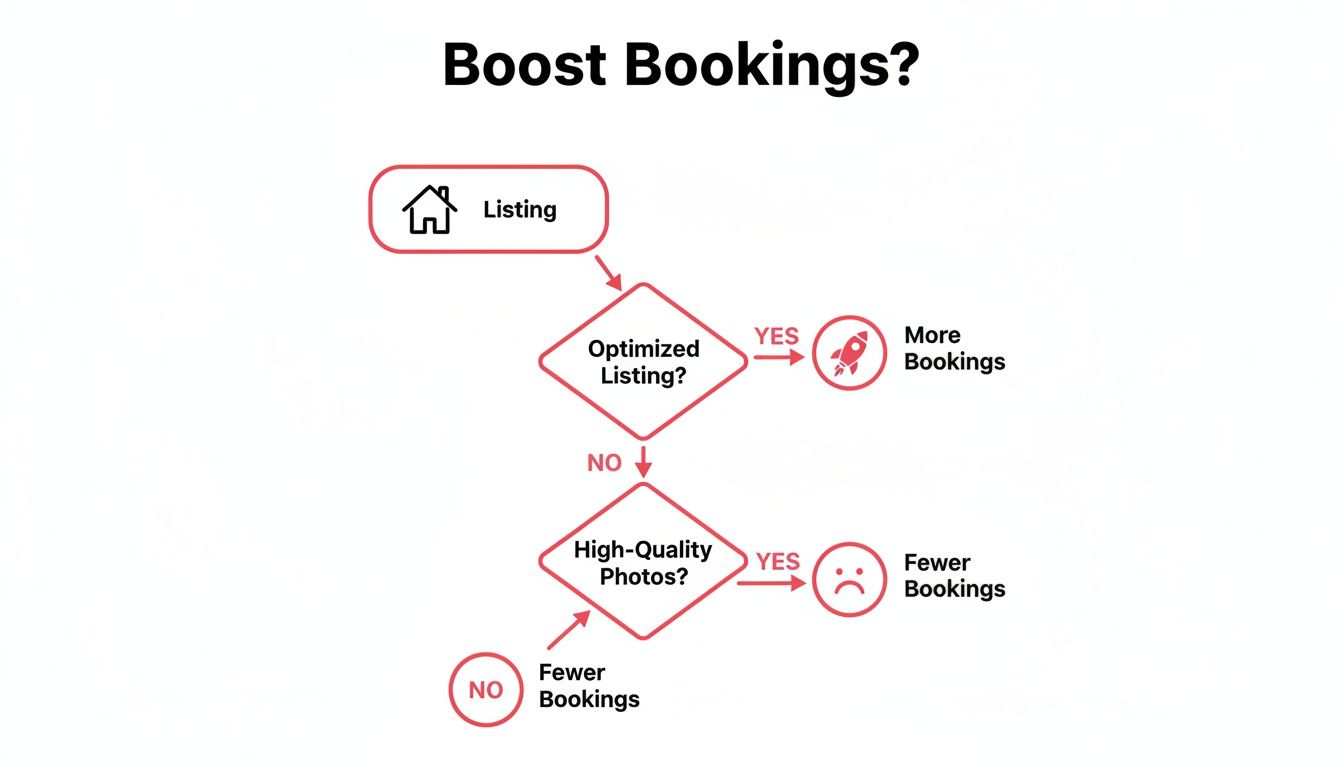
It’s a simple but powerful idea: a well-presented listing with the right imagery gets the booking. A confusing or incomplete one gets scrolled past.
Choosing the Right Format for Your Rental Listing
To make the decision even clearer, this table breaks down the key differences between a single 360 spin and a full virtual tour.
| Feature | 360 Product Photo (Spin) | Full Virtual Tour |
|---|---|---|
| Experience | A static, 360-degree view from a single point. | An interactive walkthrough connecting multiple 360 views. |
| Best For | Single rooms, studios, unique features (e.g., a hot tub with a view). | Multi-room homes, properties with complex layouts, and large estates. |
| Guest Insight | Shows the feel and layout of one specific area. | Provides a full understanding of the property's flow and scale. |
| Cost | Lower cost; typically priced per photo. | Higher initial investment; priced for the entire property. |
Ultimately, the best choice is the one that gives your potential guests the confidence to click "book."
What Do Your Guests Need to See?
At the end of the day, your choice should be about answering a guest's questions before they even have to ask. The whole point of using 360 product photography is to set clear expectations and show off what makes your place great.
Think about the star of your property. Is it the jaw-dropping view from the master bedroom? A single, stunning 360 photo focused right there might be your most powerful marketing tool. Or is it the huge, open-concept kitchen and living area? A virtual tour is the only way to truly do it justice.
To help you land on the right option, ask yourself these questions:
- What's my property's biggest selling point? Put your focus there.
- Is the layout a key feature? If it is, you need a virtual tour.
- What’s my budget? A single 360 photo is much more affordable than a full tour.
- What are my competitors doing? Use immersive visuals to stand out from the crowd.
Answering these will help you make a smart investment. If you want to dive deeper into how this works in practice, our guide on 3D photography for real estate has even more examples. By matching the right format to your property, you’re not just adding a gimmick—you’re adding a powerful tool that helps turn lookers into bookers.
How These Immersive Photos Are Actually Made
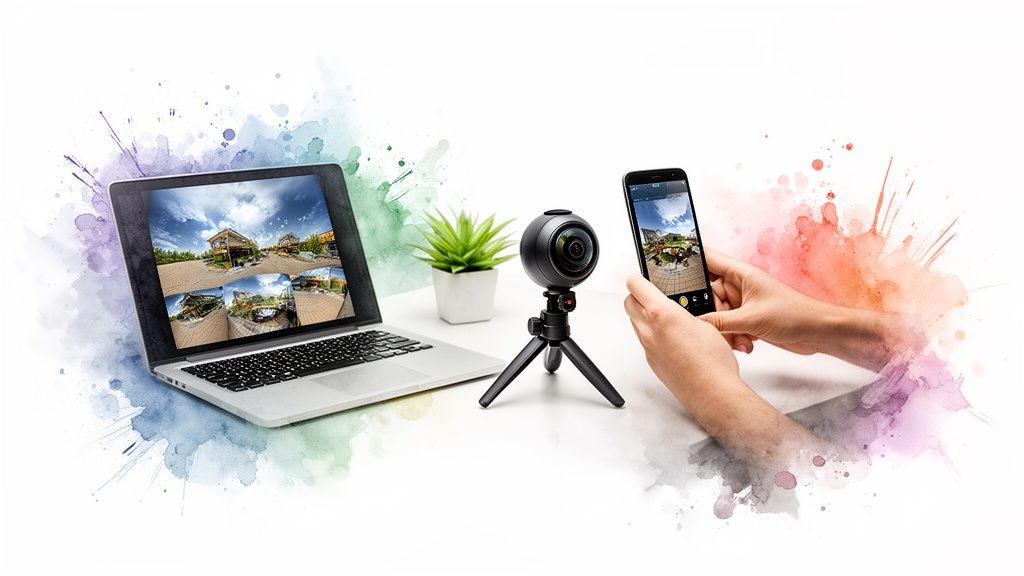
So, how does this magic actually happen? Let's pull back the curtain. The process might sound incredibly technical, but the core idea is pretty straightforward. Think of it less like complex coding and more like a creative puzzle where you're putting pieces together to reveal the full picture.
At its simplest, creating a 360 product photography spin means taking a series of photos from one single spot. You pivot the camera, making sure each picture slightly overlaps the one before it. Afterward, these individual shots are "stitched" together with software to create one seamless, spherical image.
The Essential Toolkit
You definitely don't need a Hollywood budget to get started. The gear for creating 360 photos ranges from simple smartphone setups to high-end professional equipment. The right choice just comes down to your budget and what you want to achieve.
Here’s a breakdown of the typical gear you'll see:
- The Camera: This is the heart of the operation. You could use a dedicated 360-degree camera, which often has two lenses to capture everything at once. Or, you could use a traditional DSLR or mirrorless camera for higher-resolution results. Even a modern smartphone can pull off some impressive shots.
- The Tripod: Stability is absolutely non-negotiable. A sturdy tripod makes sure every single photo is taken from the exact same height and position, which is critical for clean stitching and a smooth final experience.
- The Rotator Head: If you're not using a one-shot 360 camera, a panoramic or robotic rotator head is a game-changer. This little device sits on your tripod and turns the camera in precise, measured steps, guaranteeing perfect overlap between your shots.
The real secret isn't just the gear—it's the technique. A well-executed 360 photo shot on a smartphone will always beat a sloppy one shot on a professional camera. Consistency is everything.
The demand for this kind of technology is fueling some incredible innovation. In fact, the market for 360-degree cameras is projected to hit a staggering $21.3 billion by 2035. A massive driver of this growth—with wireless models holding 70.5% of the market—is how they help real estate and tourism pros cut down inquiry times by up to 40%. You can dig deeper into the rise of 360 camera technology on researchnester.com.
From Raw Photos to an Interactive Experience
Once you have your images, the next phase happens on a computer. This is where specialized software does the heavy lifting, turning a collection of flat pictures into an interactive experience for your guests.
The workflow usually looks something like this:
- Importing the Photos: First, you load all the individual images taken from the different angles into the stitching software.
- Stitching the Scene: The software then gets to work, identifying the overlapping parts of the photos and blending them together. It's a lot like the panorama feature on your phone, but wrapped into a complete sphere. The program erases the seams, leaving you with one continuous image.
- Refining and Editing: Just like any other photograph, 360 images can be touched up. You can adjust the brightness, color, and contrast to make them pop. This is also when you might digitally remove the tripod from the bottom of the shot, a common step called "patching the nadir."
The Unsung Heroes: Staging and Lighting
While we're geeking out over cameras and software, we can't forget the fundamentals of great photography. In fact, they matter even more when you’re showing off an entire room from every conceivable angle.
Bad lighting or a cluttered space will be glaringly obvious in a 360 photo. Before you even think about pressing the shutter button, make sure your rental is staged to perfection. Open the blinds for great natural light, turn on all the lamps for a warm, inviting glow, and make sure the space is spotless. For more tips, you can check out our guide on the best lighting equipment for photography.
Getting this foundation right is what separates a decent 360 photo from a truly stunning one that stops potential guests in their tracks.
The Real-World Payoff for Your Rental Listing
An interactive photo definitely has a "wow" factor, but what does it actually mean for your business? Let's get past the cool tech and talk about the real results that impact your success as a host. Using 360 product photography isn't just a flashy gimmick; it's a smart move that tackles the challenges every property owner faces.
First and foremost, we're constantly trying to build trust. Travelers are naturally skeptical—they’ve all heard horror stories about listings where the photos were a little too flattering. A 360 photo cuts right through that doubt by offering complete transparency. It’s like saying, "Here's my place, exactly as it is. Take a good look around."
Drive More Bookings by Building Guest Confidence
Confidence is everything when it comes to online bookings. The more certain a guest feels about your property, the faster they’ll hit that "Reserve" button. These immersive photos give them a level of detail that a handful of flat images just can't, letting them answer their own questions and truly picture themselves staying there.
This boost in confidence shows up in the numbers. Listings with interactive 360 views see much higher engagement, which can lead to a booking increase of up to 30% compared to listings with only standard pictures. For hosts, showing everything upfront means fewer messages asking "what does the patio really look like?" and a lot fewer complaints after check-in. You can dig into more data on how interactive visuals boost conversions on technavio.com.
Keep Potential Guests on Your Page Longer
Booking platforms like Airbnb and Vrbo are always watching how users interact with listings. A key signal of a great listing? How much time people spend on it. When a potential guest is clicking, dragging, and exploring your 360 photo, they're not just scrolling—they're actively engaged.
This extra "time on page" is a huge green flag for the platform's algorithm. It basically tells the system, "Hey, people are really interested in this one!" In turn, this can help you climb higher in search results, getting your property seen by more people.
Think of it this way: someone who spends three minutes virtually walking through your kitchen and living room is way more invested than someone who flips through ten static photos in thirty seconds.
Set Clear Expectations and Earn Better Reviews
One of the toughest parts of being a host is managing expectations. That beautifully framed photo of the bedroom might not show that the room is actually quite cozy, or a tight shot of the kitchen might hide its compact layout. This gap between what a guest expects and what they find is often the source of a disappointing review.
360 product photography pretty much solves this problem. By showing the entire space from every angle, you're giving a totally honest picture of your property. Guests walk in the door knowing exactly what they're getting, which is the first step to a great stay and an even better review.
Here’s how this helps create a 5-star experience:
- No Nasty Surprises: Guests see you were upfront and honest, which builds immediate goodwill.
- Fewer Back-and-Forth Questions: You'll save time answering messages about the layout or whether the bathroom has a tub.
- A Smoother Check-In: Their first impression is "Yep, this is just what I booked," not a moment of letdown.
At the end of the day, guests whose expectations are met—or even better, exceeded—are the ones who leave glowing reviews. Those positive reviews then create a powerful cycle, building trust for the next guest and leading to more bookings. It's a simple, winning formula: transparency builds trust, trust drives bookings, and happy guests leave great reviews.
Choosing Your Path: DIY Versus Hiring a Pro
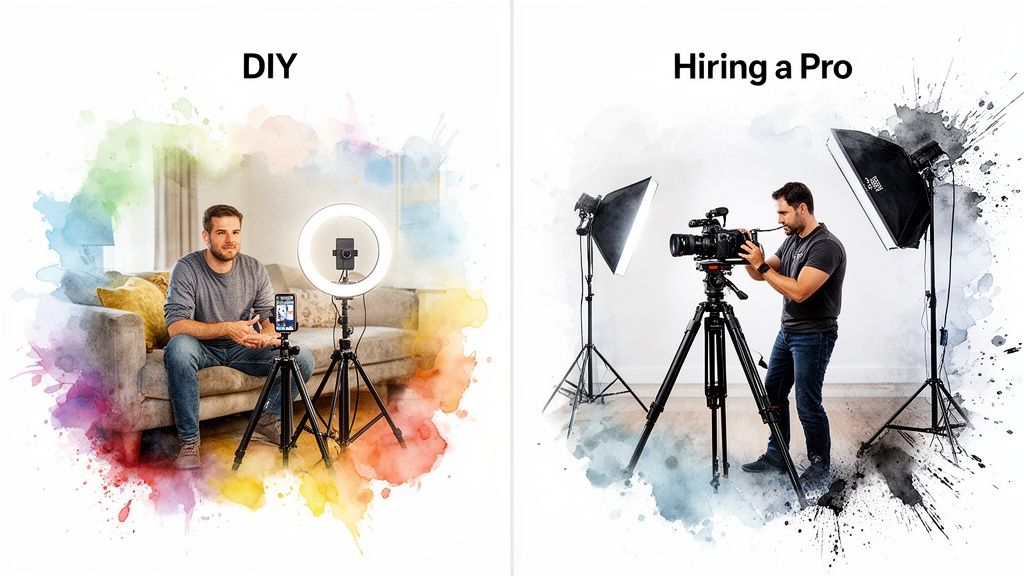
So, you see the potential of an immersive 360-degree photo for your listing. Now for the big question: do you roll up your sleeves and tackle this yourself, or call in a professional?
There's no single right answer here. The best path for you depends entirely on your budget, your timeline, and how comfortable you are with technology. It’s a classic trade-off between your money and your time.
The Do-It-Yourself Approach
Going the DIY route gives you total creative control and is a great way to pick up a new skill. But let's be realistic—it's more than just snapping a few pictures. It’s an investment in both gear and learning.
You’ll need some basic equipment to get started. A modern smartphone can work in a pinch, but a sturdy tripod and a panoramic head are non-negotiable for stable, aligned shots. For a crisper result, you might look at a dedicated 360 camera or even a DSLR setup, which can run anywhere from a few hundred to a few thousand dollars.
Then comes the software. You'll need a stitching program to merge your individual photos into a seamless, interactive image. While free options exist, the good ones usually come with a subscription. The biggest cost, though, is your time—learning the software, reshooting to fix mistakes, and editing the final product.
Hiring a Professional Photographer
Bringing in a pro is the fastest way to get a polished, high-quality 360 photo. These photographers already have the specialized gear, the technical know-how, and the artistic eye to make your property shine. They know all about lighting, composition, and creating a final image that feels genuinely inviting.
The biggest win here is getting top-tier results without the headaches and steep learning curve. While costs vary by location and the size of your space, you can generally expect to pay $100 to $300 for a single 360 spin of one room.
Before you hire anyone, do your homework. Always ask to see their portfolio, specifically for real estate or rental properties, to make sure their style matches your brand.
A great question to ask a potential photographer is, "What's your process for staging and lighting a room for a 360 shoot?" Their answer will tell you a lot about their experience and attention to detail.
A Smart Middle Ground: Shoot It Yourself, Outsource the Edit
What if you’re watching your budget but don’t have weeks to master a new editing suite? Consider a hybrid option: you shoot the photos, and then you pay someone to edit them.
This approach saves you money on the professional's on-site time but still delivers that polished, professional look. You capture the images, then send the raw files to a service specializing in photo enhancement and stitching. A service like rental.photos can take your good-but-not-perfect shots and turn them into the bright, crisp, and compelling visuals you need.
It's the best of both worlds—the cost savings of DIY with the high-quality finish of a pro.
DIY vs Professional 360 Photography Cost and Effort Breakdown
Making the right choice comes down to weighing the key factors. This table breaks down what you can expect whether you do it yourself or hire an expert.
| Factor | DIY Approach | Professional Service |
|---|---|---|
| Upfront Cost | $100 - $2,000+ for gear (tripod, 360 camera/DSLR), plus software subscriptions. | $100 - $300 per 360 spin. No gear or software costs. |
| Time Investment | High. 10-20 hours for learning, shooting, and editing for your first project. | Low. 1-2 hours for booking and the on-site shoot. |
| Skill Required | Moderate to High. Requires learning photography principles and new software. | None. The photographer handles all technical and artistic aspects. |
| Quality | Variable. Depends heavily on your gear, skill, and patience. | Consistently High. Professional gear and expertise deliver polished results. |
| Control | Full creative control over every aspect of the final image. | Collaborative. You provide a vision, but the pro executes it. |
Ultimately, the table shows a clear trade-off. The DIY route demands more of your time and effort for a lower (but variable) financial cost, while hiring a pro gets you a guaranteed high-quality result quickly, for a higher price.
To make the final call, ask yourself these questions:
- Budget: Do you have more money to spend, or more time to invest?
- Tech Skills: Are you excited to learn new software, or does that sound like a chore?
- Timeline: How quickly do you need this for your listing? Do you have a weekend to dedicate to a new project?
- Quality Standard: Is "good enough" okay for now, or do you need a flawless look from day one?
Answering these honestly will point you straight to the best approach for your rental.
Getting Your 360 Photos to Boost Bookings
Creating a stunning 360 photo is a huge win, but it’s only half the battle. Now, you’ve got to put that powerful asset to work. The good news is that major booking platforms are already built to handle this kind of media, so getting it online is surprisingly simple.
For sites like Airbnb, you’ll upload the 360 image file just like any other picture in your gallery. The platform is smart enough to detect its interactive format and will automatically display it with a viewer, letting potential guests click and explore. Most sites have their own specific guidelines, but they generally support the standard file types you get from 360 cameras and software.
Where Should You Place Your 360 View?
Once it’s uploaded, where does the 360 photo belong in your gallery? It might seem like a good idea to make it the very first image, but I'd suggest holding back. Your first image—the hero shot—needs to be a breathtaking static photo that stops scrollers in their tracks.
Try placing your 360 photo as the second or third image in the lineup. This strategy builds a bit of intrigue. A guest sees that gorgeous cover photo, clicks to see more, and is immediately rewarded with an immersive experience they can control. That little moment of discovery is incredibly powerful for keeping them glued to your listing.
Your goal is to guide the guest from initial interest to deep exploration. A stunning lead photo hooks them, and the 360 view reels them in, giving them the confidence to move from "just looking" to "ready to book."
To really make it count, don't just upload it and walk away. Weave it into your listing's story. If you want to dive deeper into building a visual narrative, our guide on pictures for real estate marketing has some great tips.
Let People Know It's There
Your 360 photo is a standout feature, so you have to tell people about it! A simple mention in your listing description can spark curiosity and get more eyes on your photo gallery.
Here are a few easy ways to highlight it:
- In your summary: Start with a hook like, "Come see our amazing ocean view for yourself—check out the interactive 360 photo in our gallery!"
- In room descriptions: When you're describing the main living area or master bedroom, add a little note like, "(Don't miss the 360-degree tour of this space in our photos!)"
- On social media: Don't just post a link. Share a quick screen recording of someone exploring the 360 photo. This creates a dynamic video post that shows off the feature and drives people directly to your listing.
By actively promoting your 360 photo, you turn it from a cool gimmick into an active booking tool that truly sets your rental apart.
Common Questions from Rental Hosts
Even when the benefits are clear, diving into something new like 360 product photography is bound to bring up a few questions. As a host, you're always weighing the return on any investment, whether it's your time or your money. Let's dig into some of the most common things hosts ask.
Do I Need a Super Expensive Camera to Start?
Not at all. While a professional 360 camera will certainly give you those crisp, high-resolution results, the camera in your pocket is surprisingly powerful. Many modern smartphones can capture a fantastic 360 photo for your listing.
The real difference-makers are a steady hand (a simple tripod is even better) and great lighting. For hosts on a tight budget, using your phone is the perfect way to get started. You can always hire a professional editor to give your final images that extra polish without shelling out for a full photoshoot.
Will a 360 Photo Slow Down My Airbnb Listing?
That’s a totally fair question. Nobody wants a slow-loading listing. But you can rest easy knowing the major booking platforms are built to handle this kind of media. The 360 photo viewers they use are designed to be light and fast.
When a guest first lands on your page, a simple preview image loads instantly, so your initial page speed isn't affected one bit. The interactive 360 experience only kicks in when a guest actively clicks on it. In fact, that extra engagement signals to the platform's algorithm that your listing is a good one, which can actually boost your spot in search results.
Don't think of it as a heavy file that bogs down your listing. Think of it as a powerful engagement tool that the booking platform is designed to reward.
What Is a Fair Price for Professional 360 Photography?
This is one of those "it depends" answers, as costs vary a lot based on where you are and the size of your property. But we can talk about some general ballpark figures. For a single 360 "spin" of one room, you might see prices between $100 and $300.
If you want a full virtual tour of a larger home, that number can climb, often ranging from $300 to over $1,000. It's always smart to shop around and get a few quotes from local photographers who specialize in real estate or vacation rentals.
When you're asking for quotes, make sure to ask if editing and post-production are included. And remember that hybrid option—shooting the photos yourself and paying a pro service to edit them can be a great way to get stunning results without breaking the bank.
Ready to make your rental listing irresistible? The team at rental.photos can take your existing photos and transform them into bright, crisp, and inviting images that capture guest attention. Elevate your listing and watch your bookings grow. Get your photos professionally enhanced today.
Ready to have professional photos?
Our team transforms your existing rental photos into stunning, high-converting images that bring you more bookings. No photoshoot required. 100% refund guaranteed.
Improve My Photos →