Vacation rental insurance options explained
In the world of vacation rentals, 75% of hosts have encountered property damage or liability issues at least once, highlighting a significant risk often overlooked by new and seasoned rental owners alike. Whether it's a guest accidentally damaging a rare piece of furniture or a sudden storm causing structural harm, the financial repercussions can be substantial. Additionally, liability claims from injuries on the property can lead to expensive legal battles. Vacation rental insurance serves as a crucial safeguard, not only protecting your property but also securing your income against unpredictable events. By the end of this post, you’ll gain a comprehensive understanding of the different types of insurance options available, helping you make informed decisions to protect your investment effectively.
What is vacation rental insurance and why do you need it?
Vacation rental insurance is a specialized type of coverage designed to protect property owners who rent out their homes on platforms like Airbnb, Vrbo, or similar. Unlike standard homeowners insurance, which generally does not cover short-term rental activities, vacation rental insurance provides tailored protection for the unique risks associated with renting out your property.
Understanding the Basics
When you rent out your property, you are essentially opening your home to strangers, which introduces different risks compared to typical homeownership. Vacation rental insurance differs from standard homeowners insurance in several key ways:
- Purpose-Specific Coverage: Homeowners insurance is not designed to cover vacation rental activities. If you rely solely on it, you might find yourself vulnerable to denied claims.
- Income Protection: In the event that your property becomes uninhabitable due to a covered loss, vacation rental insurance can offer coverage for lost rental income. This ensures that your income stream is protected even if your property is temporarily out of commission.
- Broader Liability Protection: This insurance type often includes liability coverage for incidents involving guests, reducing the risk of costly lawsuits.
Key Coverage Areas
Understanding the main coverage areas of vacation rental insurance can help you make informed decisions:
- Property Damage: Covers physical damage to the structure and contents caused by guests or unforeseen events. For instance, a host once faced significant costs when a guest accidentally set off a fire, damaging several rooms. This insurance covered the repair expenses, which reached into the thousands.
- Liability Coverage: Protects against legal claims if a guest is injured on your property. This can include medical expenses and legal fees, which can be substantial.
- Loss of Income: Compensates for lost rental income if your property becomes uninhabitable due to a covered peril, ensuring financial stability during repairs.
- Guest Injuries: Covers medical payments and potential lawsuits arising from guest injuries, offering peace of mind in case of accidents.
By recognizing the differences between standard homeowners insurance and vacation rental insurance, you can better safeguard your property and financial interests. For more insights on protecting your rental property, you might find our Airbnb Host Insurance Options guide helpful.
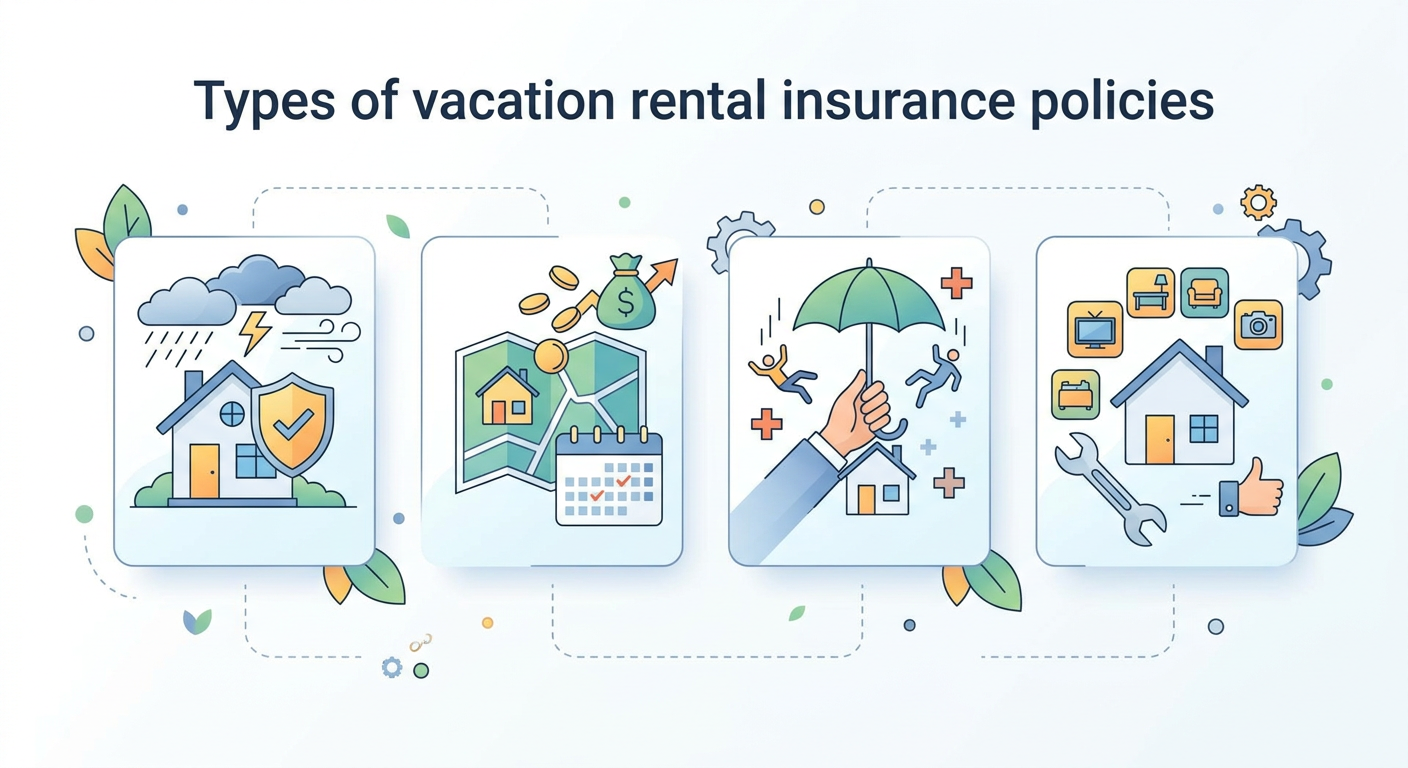
Types of vacation rental insurance policies
Navigating the world of vacation rental insurance can be daunting, but understanding the different types of policies available will help you make informed decisions to protect your investment. Below are some of the most common insurance options specifically designed for vacation rental properties.
1. Host Protection Insurance
Host Protection Insurance is a policy typically offered as part of a rental platform's services. It provides coverage up to a certain amount, usually around $1 million, for bodily injury or property damage claims that occur during a guest's stay.
- Example Scenario: Imagine a guest slips on a wet floor and injures themselves. Host Protection Insurance would cover the medical expenses and any legal fees that might arise. This type of insurance acts as a safety net for when unforeseen incidents occur, giving you peace of mind without having to dive deep into your personal finances.
2. Commercial Property Insurance
Commercial Property Insurance is crucial if you run your rental as a business. Unlike standard homeowners insurance, this policy covers the building and its contents against damage from events like fires, storms, or theft.
- Example Scenario: Consider a scenario where a severe storm leads to water damage in your property. With commercial property insurance, the costs of repair and restoration are covered, allowing you to quickly return to normal operations.
3. Liability Insurance
Liability Insurance is essential for protecting yourself against claims that could arise from injuries or damages that occur on your property. This type of insurance covers legal fees, medical expenses, and potential settlements.
- Example Scenario: A guest might claim that faulty wiring caused a small electrical fire during their stay. Liability Insurance would help cover any legal defense costs and potential payouts, ensuring your personal assets are not at risk.
Understanding these types of vacation rental insurance policies will empower you to choose the right coverage for your unique situation. For more tips on managing your rental property, you might explore our guide on Vacation Rental Staging Secrets.
Factors to consider when choosing a policy
Selecting the right insurance policy for your vacation rental is critical to ensure comprehensive protection. Here are key factors to consider:
Evaluating Coverage
When evaluating an insurance policy, the coverage limits are paramount. Coverage limits dictate the maximum amount an insurer will pay for a covered loss. For instance, if your policy covers up to $500,000, any damage exceeding this amount will require you to pay out of pocket. Consider a scenario where an Airbnb host experiences a kitchen fire causing $600,000 in damages. With a $500,000 coverage limit, the host would need to cover the remaining $100,000 themselves.
- Identify what is covered: Ensure the policy includes both property damage and liability coverage. This dual coverage is critical if you're renting out your home to guests.
- Review exclusions and conditions: Policies often have specific exclusions such as damage from certain natural disasters. If your property is in a flood-prone area, ensure that flood damage is included, or consider additional coverage.
Understanding Costs
The cost of an insurance policy is another critical factor. It's crucial to understand how premiums are calculated and what affects their cost.
- Compare multiple quotes: Obtain quotes from at least three different insurers to ensure competitive pricing. An Airbnb host might find that one provider offers a significant discount for bundling multiple properties under one policy.
- Evaluate deductibles: A higher deductible usually results in a lower premium. However, ensure that the deductible is an amount you can comfortably afford out-of-pocket in the event of a claim.
By thoroughly understanding these factors, you can choose a policy that not only meets your financial constraints but also provides comprehensive protection for your rental property. For more strategies on managing your rental, consider exploring our guide on Vacation Rental Pricing Strategy.
Common pitfalls in vacation rental insurance
Navigating the world of vacation rental insurance can be tricky, and it's easy to fall into common traps that could leave you exposed. Here are some pitfalls to watch out for and how you can avoid them.
Assumptions About Coverage
One of the most dangerous pitfalls is assuming that your existing homeowners insurance will cover your rental activities. This assumption can lead to significant financial loss.
- Homeowners Insurance Gaps: Homeowners policies typically do not cover rental activities. If a guest damages your property or a liability issue arises, you might find yourself uninsured.
- Case Study: Consider a host who rented out their beach house, believing their homeowners policy was sufficient. When a guest accidentally set a small fire in the kitchen, the insurance company denied the claim, citing rental use exclusions. The host was left with a $15,000 repair bill.
Ignoring Exclusions
It's crucial to understand what your vacation rental insurance policy does not cover. Ignoring policy exclusions can lead to unexpected expenses.
- Natural Disasters: Many policies exclude certain natural disasters. If your property is in a hurricane-prone area, ensure you have the appropriate coverage.
- Wear and Tear: Routine wear and tear are generally not covered. If a guest wears out your furniture, you might have to replace it out of pocket.
- Personal Belongings: Some policies exclude damage to your personal belongings. Make sure to verify whether your valuable items, like electronics, are protected.
By recognizing these common pitfalls and taking proactive steps, you can better safeguard your property and investment. For additional insights on managing your rental effectively, check out our resource on Vacation Rental Marketing Ideas.
How to maximize your insurance benefits
Updating Your Policy
Regularly reviewing your policy is essential to ensure you are adequately covered. As your rental business evolves, so too should your insurance policy. At least once a year, or whenever you make significant changes to your property, review your policy details. Consider these scenarios:
- Property Upgrades: If you've added a new deck or renovated the kitchen, update your policy to reflect these improvements. This can prevent any discrepancies in coverage amounts, should a claim arise.
- Increased Bookings: A higher volume of guests increases risk exposure. Make sure that your current policy limits are sufficient to cover this increased activity.
- Policy Limits: Check if your liability coverage aligns with industry standards. Many experts recommend at least $1 million in liability coverage for vacation rentals.
Keeping Records
Documenting rental activity and property conditions can significantly bolster your claims process. Here are some actionable steps:
- Photographic Evidence: Maintain a digital archive of photos and videos of your property, both before and after guest stays. This visual documentation can be crucial in case of a dispute.
- Guest Agreements: Keep copies of rental agreements and communications with guests. These documents can provide clarity and support during the claims process.
- Maintenance Logs: Regularly update logs detailing maintenance and repairs. This can demonstrate your commitment to property upkeep, potentially aiding in claims related to wear and tear.
Working with a Specialist
Insurance policies can be complex, and it might benefit you to consult with a specialist:
- Insurance Brokers: They can offer tailored advice and help you navigate policy options that best fit your needs. Consider seeking a broker with experience in short-term rental insurance.
- Legal Advisors: Consulting with a legal advisor can help clarify terms and exclusions in your policy, ensuring you understand your coverage thoroughly.
By staying proactive and informed, you can maximize the benefits of your vacation rental insurance policy, protecting both your property and investment. For more tips on managing your rental, explore our guide on Short Term Rental Tax Deductions.
Comparison of popular insurance providers
Choosing the right insurance provider is paramount for safeguarding your vacation rental property. The table below compares several fictional yet realistic insurance providers, highlighting their types of coverage, average costs, and unique benefits. This comparison aims to assist you in making an informed decision tailored to your specific needs.
| Provider Name | Types of Coverage | Average Cost | Unique Benefits |
|---|---|---|---|
| SecureStay | Liability, Property Damage, Loss of Income | $500/year | Includes guest injury liability up to $1 million |
| RentGuard | All-Risk, Legal Expenses, Theft | $600/year | Offers emergency support services |
| HostShield | Structural, Contents, Liability | $550/year | No deductible on theft claims |
| SafeNest | Liability, Damage, Cancellation Cover | $480/year | Automatic coverage for new bookings |
FAQs about vacation rental insurance
Do I need separate insurance for my vacation rental?
Yes, separate insurance is essential for vacation rentals. Standard homeowners insurance usually doesn't cover short-term rental activities. A dedicated vacation rental insurance policy can protect you against specific risks such as guest injuries, property damage caused by tenants, and loss of income due to cancellations.
Can I rely on Airbnb's host guarantee?
While Airbnb's host guarantee may offer some protection, it should not be considered a substitute for comprehensive insurance. The host guarantee is limited and may not cover all potential losses or liabilities. For instance, it does not cover liability for guest injuries or damages caused by intentional acts, making a dedicated insurance policy crucial.
What if my property is vacant?
If your property is vacant for extended periods, it's important to check your insurance policy's terms regarding vacancy. Some policies may not provide coverage if a property is left unoccupied for more than 30 or 60 days. Make sure to discuss these specifics with your insurance provider to avoid gaps in coverage.
How often should I review my policy?
Regularly reviewing your insurance policy is essential to ensure it still meets your needs. It's advisable to review your policy annually or whenever you make significant changes to your property or rental operations. Keeping your coverage up-to-date can help protect against new risks and ensure you receive the maximum benefits from your policy.
As a vacation rental owner, ensuring that you have the right insurance coverage is crucial for safeguarding your property and securing your income. Remember to distinguish vacation rental insurance from standard homeowners insurance, as the latter typically doesn't cover short-term rental activities. Evaluate various insurance policies and providers, considering factors like liability coverage and policy terms for vacancies, to make informed decisions. Regularly review and update your policy to adapt to any changes in your rental operations, ensuring comprehensive protection against potential risks.
Ready to have professional photos?
Our team transforms your existing rental photos into stunning, high-converting images that bring you more bookings. No photoshoot required. 100% refund guaranteed.
Improve My Photos →