Master real estate photo composition for rentals
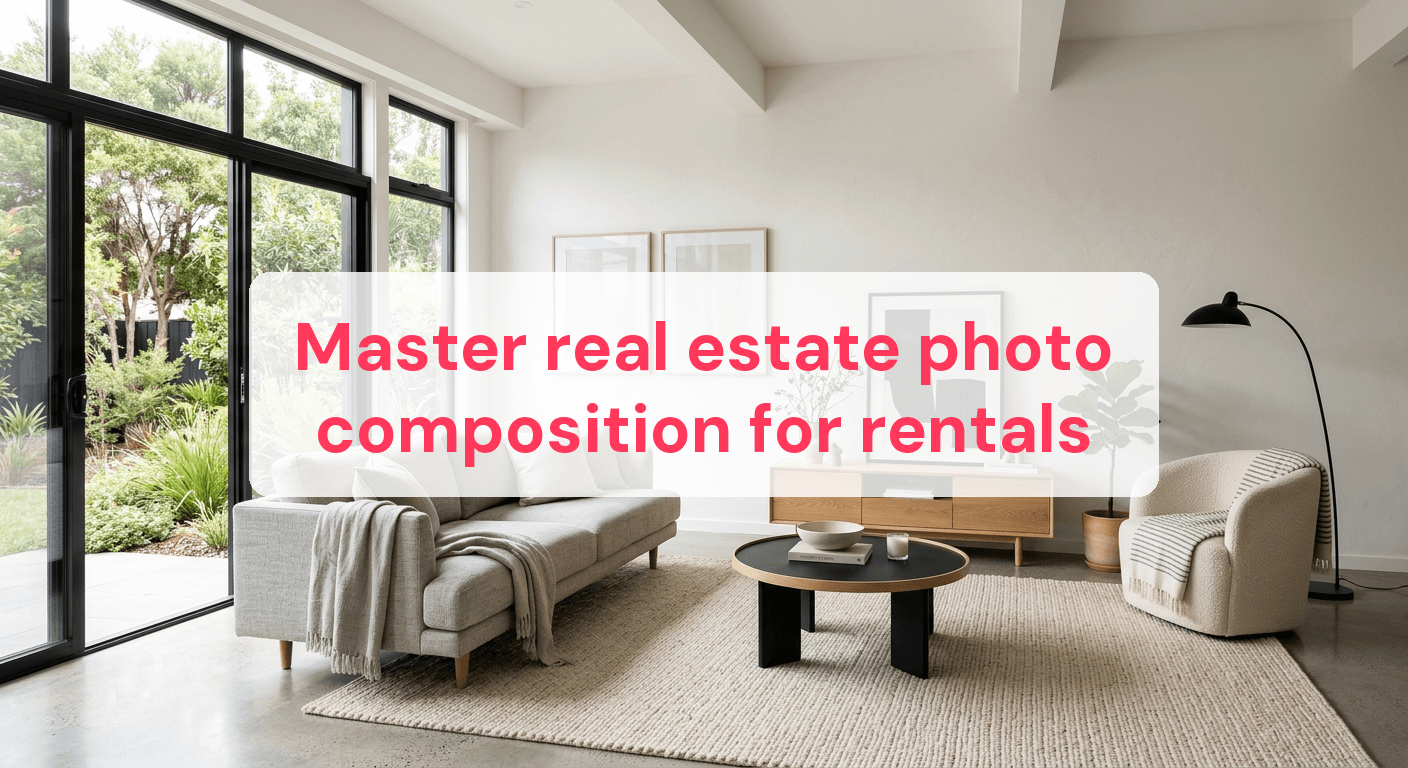
In the competitive world of short-term rentals, a well-composed photo can be your most powerful tool. According to a study by Airbnb, listings with high-quality images receive 24% more bookings than those with subpar visuals. This isn't just about aesthetics; effective photo composition can dramatically increase the number of views your listing receives, translating into more bookings and higher occupancy rates. By the end of this article, you'll understand the principles and techniques behind compelling real estate photo composition, ensuring your rental stands out in a crowded marketplace.
What makes a real estate photo composition effective?
Balance and Symmetry
Effective real estate photo composition begins with balance and symmetry. Ensuring that elements within your photo are evenly distributed creates a sense of harmony that is pleasing to the eye. You don't need a professional camera to achieve this; even a smartphone can capture well-balanced images if you pay attention to the placement of objects. For example, when photographing a living room, position the sofa and coffee table in a way that they anchor the photo, allowing the viewer's eye to naturally flow across the image. Balance is not just about symmetry but also about using elements in a way that supports the overall structure of the image.
Creating Depth and Dimension
Depth is another crucial element that can elevate your real estate photos. By incorporating layers within your composition, you can create a sense of dimension that draws viewers in. Use leading lines, like a hallway or a row of trees, to guide the viewer's eye deeper into the scene. A well-placed window or doorway can act as a natural frame, adding depth to your images. Adding foreground elements, such as a vase on a table, helps create a three-dimensional feel. This technique is particularly effective in larger spaces, where showcasing the full scope of a room or property can make a big impact.
Common Mistakes to Avoid
When composing real estate photos, there are several pitfalls to be aware of:
- Cluttered Scenes: Ensure the space is tidy and free of distractions. Clutter can overwhelm the viewer and detract from the main features of the room.
- Poor Lighting: Natural light is your best friend. Avoid harsh artificial lighting and aim for soft, even illumination.
- Ignoring Focal Points: Every photo should have a clear focal point that draws the viewer's attention. This could be a fireplace in the living room or a stunning view from the window.
For more insights on refining your photography skills, check out our Real Estate Photography Tips.
How to achieve balance without professional gear
Mastering the Rule of Thirds
When you're photographing a rental property, achieving balance is crucial, but it doesn't require expensive equipment. One of the simplest yet most effective techniques is the rule of thirds. This involves dividing your image into nine equal segments by two horizontal and two vertical lines. The idea is to place the most important elements of your scene along these lines or at their intersections.
For example, when capturing a small apartment, position the couch along one of the horizontal lines and a piece of artwork at an intersection. This arrangement naturally guides the viewer's eye and creates a more harmonious composition. In a living room setting, you might place a coffee table and a vase of flowers at these strategic points to draw attention to the space's features without overwhelming the viewer.
Utilizing Leading Lines
Another effective technique is using leading lines to create a sense of depth and guide the viewer's eye through the photograph. Leading lines can be anything from a hallway to a kitchen countertop. These lines should direct the viewer towards a focal point, like a picturesque window view or an elegantly set dining table.
Imagine photographing a narrow hallway in a rental property. Position yourself at one end of the hallway, allowing the lines of the walls and ceiling to draw attention toward a piece of art or a bright window at the other end. This not only creates a sense of depth but also makes the space appear larger and more inviting.
For more detailed advice on enhancing your real estate photography, explore our Real Estate Photo Techniques.

Does photo composition impact booking rates?
The Psychological Pull of Well-Composed Images
When potential guests scroll through listings, the first impression is often visual. A well-composed photo does more than just showcase a space; it creates an emotional connection. Studies suggest that listings with professional-quality photos can receive up to 118% more bookings compared to those with amateur shots. This isn't just about clarity or resolution—it's about how you frame your space, the angles you choose, and the story your photos tell.
Consider a bedroom photo: by placing the bed centrally and aligning decorative elements along the rule of thirds, you guide the viewer's eye naturally through the image. This technique helps the viewer to subconsciously imagine themselves in the space, increasing the likelihood of a booking.
Real-World Transformations
Let's explore some before-and-after scenarios. Imagine a living room with cluttered decor and poor lighting. The initial photo might feel cramped and uninviting. By applying composition techniques like utilizing natural light, decluttering, and re-arranging furniture to highlight space, the room can appear more spacious and welcoming.
- Before: A dimly lit photo with furniture scattered randomly.
- After: A bright, airy image with a couch centered in the frame, flanked by side tables that lead the eye to a window view.
This transformation not only makes the listing more appealing but can boost the perceived value of the rental. As a result, you might see an increase in inquiries and bookings, simply by refining the photo composition.
For insights on how technology can enhance your photography, check out our piece on Real Estate Photography Trends.
When is it better to use drone photography?
Drone photography can transform the way potential guests perceive your rental property. By offering unique perspectives that ground-level shots simply can't capture, drones elevate the visual appeal of your listing. But when does it make sense to use this technology?
Capturing Expansive Views
For properties with extensive landscapes or stunning surroundings, drones are invaluable. Imagine a vacation home perched on a cliff overlooking the ocean. A drone can soar above, capturing the dramatic coastline and providing a sense of the property's exclusivity. This creates a visual narrative that might be impossible to achieve from the ground.
- Large estates: Showcase sprawling gardens, swimming pools, or tennis courts.
- Unique terrains: Highlight rugged mountains or serene lakes adjacent to the property.
- Exclusive locations: Capture the property's proximity to landmarks or beaches.
Enhancing Property Features
Drone photography can also spotlight features that might otherwise go unnoticed. For instance, a bird's-eye view of a sprawling backyard can reveal hidden gems like a gazebo or a perfectly manicured garden. This comprehensive view often adds perceived value to your listing, enticing more potential renters.
Consider the following scenarios:
- Multi-building properties: Illustrate the layout and relationship between structures.
- Properties with unique architecture: Capture the design's full impact from above.
- Neighborhood highlights: Demonstrate proximity to parks, trails, or other amenities.
For more insights on maximizing the benefits of drone photography, explore our Real Estate Drone Photography Benefits. By incorporating aerial shots, you can present a more compelling and complete picture of what your rental offers, driving interest and bookings.
Can apps assist with photo composition?
In the world of real estate photography, mobile apps have become invaluable tools for enhancing photo composition. These apps can help you transform ordinary images into extraordinary ones, ensuring your rental listings stand out.
Grid Overlays for Perfect Alignment
One of the most useful features in many photography apps is the grid overlay. This tool allows you to apply the rule of thirds directly to your camera viewfinder. By aligning key elements of your scene along these grid lines, you create a more balanced and visually appealing composition. For instance, positioning the horizon along the upper or lower third of your frame can dramatically improve the depth and interest of your outdoor shots. Many apps also offer customizable grids, so you can experiment with different compositions until you find the perfect alignment.
Editing Tools to Enhance Composition
Beyond capturing the perfect shot, apps offer editing tools that can enhance your photos further. Features such as cropping, straightening, and adjusting perspective allow you to refine your composition post-capture. For example, if you find that your interior photos are slightly misaligned, you can use the straightening tool to correct the angles, giving your images a professional finish. Moreover, advanced apps include perspective correction options, which can help you adjust the distortion often caused by wide-angle lenses, making rooms appear more spacious and inviting.
For more detailed exploration of real estate photography apps, their features, and tips on using them effectively, visit our Real Estate Photo Apps Tips. Embracing these digital aids can significantly elevate the quality of your property listings, potentially increasing your bookings and boosting your rental business.
Comparison of photo composition techniques
Understanding the strengths and limitations of various photo composition techniques can greatly enhance the visual appeal of your rental listings. This comparison will help you identify the best approaches to highlight the unique features of your properties, whether you're shooting interiors or exteriors.
| Technique | Description | Pros | Cons |
|---|---|---|---|
| Rule of Thirds | Divides the image into thirds, both horizontally and vertically. | Creates balanced and dynamic compositions. | May not suit all architectural styles. |
| Symmetry | Focuses on creating a mirrored effect by centering subjects. | Emphasizes harmony and structure in images. | Can appear static or overly formal. |
| Leading Lines | Uses lines to direct the viewer’s eye towards a focal point. | Adds depth and guides attention effectively. | Requires careful planning and positioning. |
| Framing | Incorporates natural elements to frame the main subject within the scene. | Adds context and draws focus to the subject. | Can be challenging in cluttered environments. |
| Golden Ratio | Based on a mathematical ratio, offers a more organic compositional balance. | Enhances aesthetic appeal with natural proportions. | Complex to apply without digital tools or guides. |
FAQ
Do I really need a wide-angle lens for real estate photography?
A wide-angle lens is not absolutely necessary, but it is highly recommended for real estate photography. Wide-angle lenses allow you to capture more of the room in a single shot, making spaces appear larger and more inviting. For small rooms where space is at a premium, a lens with a focal length between 10mm and 24mm on a crop sensor camera can make a significant difference.
How can I fix harsh shadows indoors?
Harsh shadows indoors can be softened by using diffused lighting. This can be achieved by bouncing a flash off the ceiling or walls, or by using natural light from windows during the day. Adjusting the angle of the light source can also help in reducing unwanted shadows and creating a more evenly lit scene.
Are professional photographers necessary for good composition?
While professional photographers bring expertise and experience, good composition can be achieved by anyone with practice and understanding of basic techniques. Familiarizing yourself with rules like the rule of thirds and symmetry, and practicing them regularly, can significantly enhance your photography skills without the need for professional help.
What settings should I use for interior shots?
For interior shots, set your camera to a low ISO, around 100 to 400, to minimize noise. Use a small aperture like f/8 to f/11 to ensure a deep depth of field, keeping everything in focus. A tripod is essential for stability, especially if you need to use a slower shutter speed to allow more light into the camera.
Mastering real estate photo composition is crucial for attracting potential guests and increasing booking rates. By applying techniques such as the rule of thirds and utilizing natural light, you can significantly enhance the visual appeal of your listings. Remember, you don't need professional gear to achieve professional results—practice and attention to detail can make all the difference. Explore the techniques discussed and start refining your photography skills to elevate your rental's visual presence.
Ready to have professional photos?
Our team transforms your existing rental photos into stunning, high-converting images that bring you more bookings. No photoshoot required. 100% refund guaranteed.
Improve My Photos →