From Newbie to Superhost: 8 Airbnb Tips I Wish I'd Known From the Start
Stepping into the world of Airbnb hosting feels like a mix of excitement and a little bit of 'what have I gotten myself into?' I remember that feeling well. You're not just listing a space; you're crafting an experience, a temporary home for travelers. The difference between a vacant calendar and a fully booked one often comes down to a few key strategies that many new hosts, myself included, overlook in the beginning. This guide is your shortcut past the common mistakes.
This list isn't just generic advice. It's a real-world roadmap built from my own hosting experiences, designed to give you a strong start. We're going to walk through a complete set of airbnb host tips for beginners that covers everything from creating a visually stunning listing that stops scrollers in their tracks to mastering the art of guest communication that earns those coveted five-star reviews. You'll learn how to set a smart pricing strategy, what amenities truly matter, and how to manage your calendar for maximum occupancy and revenue.
We'll break down how to optimize your listing description, manage your reputation, and create a comprehensive house manual that answers guest questions before they even have to ask. Let's turn your property into a guest's favorite memory and a thriving business from day one.
1. Professional Photography & Visual Presentation
Let's be honest: your photos are the single most important part of your Airbnb listing. In a sea of options, potential guests are scrolling fast, and your images are what make them stop and click. High-quality, professional-looking photos aren’t just a nice-to-have; they are the cornerstone of a successful rental business and a non-negotiable for any serious host. Think of it as your property’s first impression, resume, and sales pitch all rolled into one.

Why Professional Visuals Matter
The data is clear: listings with professional photos get more attention. Airbnb’s own research shows these listings can earn up to 40% more, receive more inquiries, and book more nights. It's because professional photographers know how to use light, angles, and composition to make your space look its absolute best—spacious, bright, and inviting. It's one of the few upfront investments where you can see a direct and immediate return.
How to Get Pro-Level Photos
You have two excellent options to achieve a polished, professional look:
- Hire a Professional Photographer: This is the most straightforward route. A real estate photographer will handle staging, lighting, and shooting to capture your property perfectly.
- Use a Photo Enhancement Service: If you have a good eye and a decent camera, you can take the photos yourself and send them to a service like rental.photos. They specialize in enhancing images for rental properties, correcting colors, adjusting brightness, and ensuring every photo in your gallery looks consistent and appealing. This is a cost-effective way to get a high-end result.
For a deeper dive into what makes a compelling image, you can explore the essentials of pictures for real estate marketing and apply those principles to your listing.
Actionable Tips for Your Photoshoot
Whether you hire a pro or DIY, follow these key guidelines:
- Stage Every Room: Declutter completely, add small decorative touches like a bowl of fruit or fresh flowers, and make sure every surface is spotless.
- Use Natural Light: Schedule your shoot for a bright, sunny day and open all the curtains. Light is your best friend.
- Capture All Areas: Photograph every room, including bedrooms, bathrooms, the kitchen, and living areas. Don't forget outdoor spaces and unique amenities. Aim for 20-30 high-quality photos.
- Update Seasonally: If you have a pool, show it off in the summer. If you have a cozy fireplace, update your main photo in the winter. This keeps your listing looking fresh and relevant year-round.
2. Competitive Pricing Strategy & Dynamic Pricing
Setting the right price for your Airbnb is a delicate balancing act. Price too high, and you risk an empty calendar; price too low, and you're just leaving money on the table. A smart, dynamic pricing strategy is one of the most vital Airbnb host tips for beginners because it lets you automatically adapt to what's happening in your market, maximizing both your occupancy and your revenue. This isn't about setting one price and forgetting it; it's about treating your rental like a business where rates respond to supply and demand.

Why Dynamic Pricing is Essential
A static, unchanging price ignores crucial factors like seasonality, local events, and even the day of the week. Dynamic pricing allows you to charge a premium during high-demand periods (like holidays or major festivals) and offer competitive discounts to attract guests during the slow season. This proactive approach ensures your property remains attractive to potential guests year-round, directly boosting your income and preventing those long, costly vacancies.
How to Implement a Smart Pricing Strategy
You don't need to be a market analyst to set effective prices. Modern tools make it simple:
- Use a Dynamic Pricing Tool: This is the most efficient method. Services like Beyond Pricing or Wheelhouse connect to your Airbnb account and automatically adjust your nightly rates based on hundreds of data points. They analyze local demand, competitor pricing, and booking trends to keep you perfectly priced every single day.
- Leverage Airbnb's Smart Pricing: Airbnb offers its own built-in tool that suggests nightly rates. While less sophisticated than third-party options, it's a great starting point for beginners to understand how prices can fluctuate based on local demand.
Actionable Tips for Setting Your Rates
Whether you use a tool or set prices manually, keep these guidelines in mind:
- Analyze Your Comps: Find 5-10 comparable listings in your immediate area. Look at their calendars to see what they charge for weeknights, weekends, and future holidays to establish a baseline.
- Factor in Local Events: Research what's happening in your city. A major concert, convention, or sporting event can justify a 40-60% price increase. Plan and adjust your rates months in advance.
- Offer Long-Stay Discounts: Attract guests looking for weekly or monthly stays by offering a 10-20% discount. This provides stable income and reduces the time you spend on guest turnover.
- Don't Undervalue Yourself: If you've invested in professional photos and great amenities, price accordingly. A low price can sometimes signal low quality to potential guests.
3. Optimized Listing Description & SEO
After your photos grab a guest's attention, your listing description is what seals the deal. It's so much more than just a list of amenities; it's your chance to tell a story, manage expectations, and persuade guests that your property is the perfect choice for their trip. A well-crafted, keyword-rich description also helps you rank higher in Airbnb search results, making it a critical piece of your marketing strategy.
Why a Great Description Matters
Airbnb's algorithm works a lot like a search engine, prioritizing listings that are detailed and relevant to what a guest is looking for. Properties with thorough descriptions highlighting unique features and location advantages often see more inquiries and bookings. A clear description also sets accurate expectations, leading to fewer guest issues and better reviews. It’s a foundational element for any new host aiming for success.
How to Write a Compelling Description
Your goal is to be both informative and enticing. Blend descriptive language with practical details to create a complete picture for your potential guests.
- Focus on Benefits, Not Just Features: Instead of just saying "Full kitchen," try "A fully-stocked kitchen with high-end appliances, perfect for cooking a family meal after a day of exploring."
- Tell a Story: Give your space a personality. Is it a "serene artist's retreat" or a "vibrant urban hub for adventurers"? Use evocative language that connects with your ideal guest.
- Be Transparent: Honesty is crucial. If your apartment is on the fourth floor with no elevator, mention it. Setting correct expectations from the start prevents disappointment and negative feedback.
For hosts looking to provide an even clearer picture of their space, you can find out how floor plans boost bookings and integrate that information into your description.
Actionable Tips for Your Listing Description
Use these simple yet effective airbnb host tips for beginners to optimize your text:
- Lead with Your Best Feature: Start your description with your property's main selling point, like a "stunning rooftop terrace with city views" or "steps away from the beach."
- Use Natural Keywords: Think about what guests search for. Include phrases like "cozy downtown studio" or "family-friendly home with a pool" naturally throughout your text.
- Highlight the Neighborhood: Describe what's nearby. Mention popular cafes, parks, transit stops, and attractions to sell the location as much as the property itself.
- Use Bullet Points: Break up long paragraphs with bullet points for amenities, house rules, and key features. This makes your listing easy to scan on mobile devices.
- Update Regularly: Added a new smart TV or coffee machine? Update your description to reflect new amenities and keep your listing fresh.
4. Responsive Guest Communication & Quick Response Times
In the world of Airbnb, communication is everything. Prompt, professional, and friendly messages are the foundation of a five-star guest experience and a thriving rental business. Your guests are often booking in an unfamiliar area, and your quick response is the first sign that they’ve found a reliable, trustworthy host. This isn’t just good hospitality; it’s a core component of the Airbnb algorithm, directly impacting your search ranking and booking potential.

Why Quick Communication Matters
Speed and clarity build immediate trust and can be the deciding factor for a guest choosing your property over another. Airbnb’s own data shows that hosts who respond within an hour are far more likely to secure a booking. Maintaining a high response rate and short response time is also a key requirement for achieving and keeping Superhost status, a badge that tells guests you are one of the best in the business. Excellent communication prevents misunderstandings, manages expectations, and is your best tool for resolving issues before they become negative reviews.
How to Systematize Your Communication
Being responsive doesn't mean being chained to your phone 24/7. It means having smart systems in place:
- Use Airbnb’s Tools: The platform offers features like Saved Replies and Scheduled Messages. These are perfect for creating templates for frequently asked questions (parking, Wi-Fi, check-in instructions) and for automating key messages, like a welcome note sent the day before arrival.
- Property Management Software (PMS): As you grow, tools like Guesty or Hostaway can centralize all guest communications from multiple platforms into one inbox, making it easier to manage and respond quickly.
Actionable Tips for Five-Star Communication
Implement these practices to make every guest interaction smooth and professional:
- Aim for Under an Hour: During waking hours, make it a goal to reply to all new inquiries within 60 minutes. This simple habit dramatically increases your booking conversion rate.
- Create Message Templates: Draft and save responses for common questions about check-in, check-out, amenities, and local recommendations. This saves you time and ensures consistency.
- Send a Pre-Arrival Message: About 24-48 hours before check-in, send a friendly message with all the essential details: the address, entry codes, parking info, and your contact number.
- Check In Post-Arrival: A simple message the morning after they arrive to ask if everything is okay shows you care and gives you a chance to fix any small issues immediately.
- Maintain a Professional Tone: Always be polite, warm, and helpful, even when dealing with a complaint. Your tone can de-escalate a situation and turn a potential negative into a positive.
5. Comprehensive House Manual & Clear Guest Instructions
Your house manual is the operational bible for your property. It's the go-to guide that answers guest questions before they even have to ask them, saving you time and preventing those frustrating late-night texts about the Wi-Fi password or how to use the coffee maker. A well-crafted manual is more than just a list of rules; it's a tool for empowerment that makes guests feel confident and at home, which drastically reduces friction and improves their overall experience.
Why a Detailed Manual Matters
Think of your manual as proactive customer service. Instead of waiting for a problem to arise, you anticipate needs and provide clear, accessible solutions. This simple act of preparation significantly reduces your communication workload—I've seen a huge drop in those "How do I...?" questions since perfecting mine. More importantly, it demonstrates a high level of professionalism and care, which guests recognize and appreciate in their reviews.
How to Create a Great House Manual
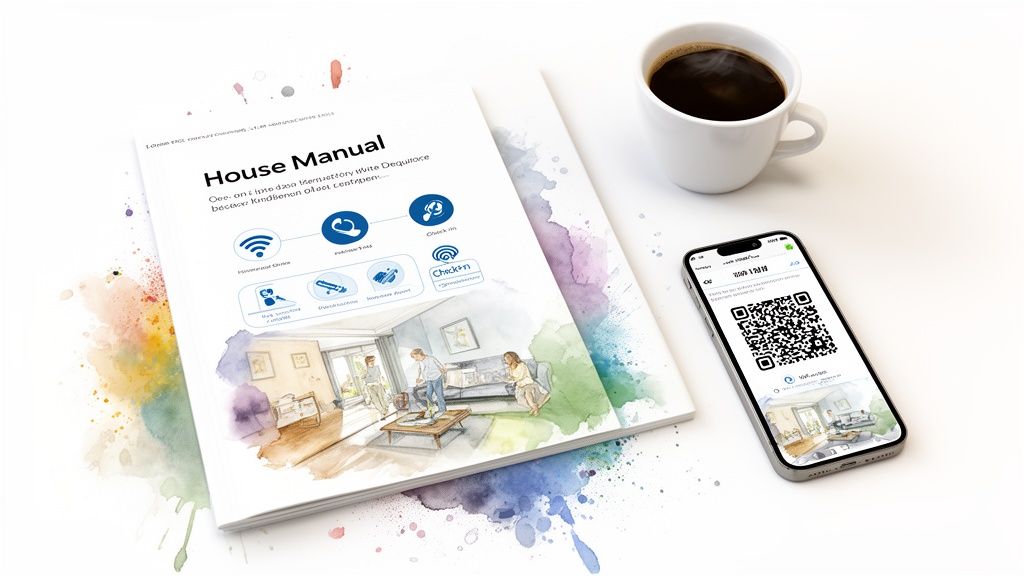
Your goal is clarity and accessibility. You should offer both a digital version sent before check-in and a physical copy guests can easily find upon arrival.
- Digital Tools: Use platforms like Canva to design a beautiful PDF or a tool like Hostfully to create interactive digital guidebooks. These can be easily updated and shared via a simple link.
- Physical Copy: A professionally printed and bound book or a high-quality binder makes a strong impression. Place it in a highly visible location, like the coffee table or kitchen counter.
Actionable Tips for Your Manual
Organize your manual into logical sections with clear headings to make information easy to find:
- Create a "Quick Start" Page: Design a one-page summary with the absolute essentials: Wi-Fi password, emergency contacts, and check-out instructions. This is perfect for tired travelers.
- Organize by Section: Use clear headers like Arrival & Access, Appliances & Amenities, House Rules, and Local Favorites.
- Use Visuals: Don't just write instructions; show them. Include photos, diagrams, or even QR codes that link to short video tutorials for complex devices like a smart thermostat or a high-end espresso machine.
- Include Neighborhood Gems: Go beyond the tourist traps. Share your favorite local coffee shop, the best park for a morning walk, and a reliable grocery store. This personal touch makes guests feel like insiders.
- Keep it Updated: Review your manual seasonally. Add instructions for the fireplace in the winter and the A/C in the summer. If you change your Wi-Fi password, update the manual immediately.
6. Strategic Amenities & Unique Value Propositions
Beyond a clean bed and a roof, your amenities are what transform a simple stay into a memorable experience. Thoughtfully chosen amenities are not just extras; they are your property's unique value proposition, allowing you to stand out in a competitive market and command a higher price. For beginner Airbnb hosts, the key is to move beyond the basics and strategically offer features that cater directly to your ideal guest.
Why Strategic Amenities Matter
The right amenities directly influence guest satisfaction and your bottom line. Data shows that properties with full kitchens can earn a 15-25% pricing premium, while luxury linens and toiletries are mentioned in a high percentage of 5-star reviews. These aren't just costs; they are investments that attract your target demographic, justify a higher nightly rate, and generate the glowing reviews that fuel future bookings. It’s about creating a signature experience that guests can't get just anywhere.
How to Select High-Impact Amenities
Your goal is to offer a mix of essential and unique amenities that create undeniable value for your specific guest profile.
- Cover the Essentials: High-speed Wi-Fi, a well-equipped kitchen, and in-unit laundry are now standard expectations. Nailing these basics is non-negotiable.
- Add Memorable Touches: Differentiate your listing with unique features. A vintage record collection, a curated selection of local art, or a high-end espresso machine can become the signature selling point that guests remember and mention in reviews.
- Invest in Smart Tech: Smart home features like keyless entry and smart thermostats appeal to tech-savvy travelers and add a layer of convenience and modernity that guests appreciate.
Actionable Tips for Your Amenity Strategy
Use this checklist to ensure your amenities deliver maximum impact:
- Define Your Ideal Guest: Are you hosting families, business travelers, or couples on a romantic getaway? A family might value a high chair and board games, while a business traveler needs a dedicated workspace and a fast iron.
- Highlight Everything in Your Listing: Use your professional photos and description to showcase every great amenity. If you have a brand-name coffee maker or luxury towels, mention it.
- Prioritize High-ROI Investments: Start with amenities that offer the biggest return, like a smart lock for seamless check-in or blackout curtains for a better night's sleep.
- Keep It Accurate and Functional: Routinely check to ensure every amenity you list is present, clean, and in perfect working order. Nothing disappoints a guest faster than a broken coffee pot.
7. Positive Reviews & Reputation Management
Guest reviews are the social currency of Airbnb. They are the bedrock of your credibility and a primary driver of your listing's visibility in search results. For new hosts, building a strong base of positive reviews is not just a goal; it's a fundamental business strategy. Think of your reviews as a public report card that tells future guests exactly what kind of experience to expect. A high rating isn't just nice, it's essential for survival and success.
Why Your Reputation Matters
Your review score is a direct signal to the Airbnb algorithm. Listings with consistently high ratings (especially 4.8 and above) are rewarded with better search placement, leading to more views and bookings. Superhost status, which requires a 4.8+ average rating, further boosts this visibility. The data is compelling: listings with a 4.9+ rating can see significantly higher booking rates than those hovering around 4.6. This "review premium" allows you to build momentum, justify higher prices, and attract better guests.
How to Build a 5-Star Reputation
Building an excellent reputation is an ongoing process that starts before the guest even books and continues after they check out. It's about creating a consistently outstanding experience.
- Proactively Encourage Reviews: Don't leave reviews to chance. Send a polite, personalized message about 24 hours after checkout. Thank your guests for staying and mention you’d appreciate them sharing their experience. This simple prompt can dramatically increase your review rate.
- Respond to Every Review: Acknowledge all feedback, both positive and negative, within a few days. Thank guests for their kind words and publicly address any concerns raised in critical reviews. A professional, solution-oriented response shows future guests you are a responsible and attentive host.
Actionable Tips for Review Management
Managing your reputation is one of the most crucial Airbnb host tips for beginners. Follow these guidelines to protect and enhance your brand:
- Deliver an Exceptional Experience: This is the foundation. A spotless space, clear communication, and thoughtful amenities are the easiest way to earn a glowing review.
- Address Negative Feedback Respectfully: If you receive a negative review, take a deep breath. Never be defensive. Thank the guest for their feedback, apologize that their experience wasn't perfect, and briefly state how you will address the issue.
- Screen Guests: A good screening process helps you avoid guests who may be a poor fit for your property, reducing the likelihood of a negative experience for both parties.
- Keep It Consistent: Ensure every guest receives the same high standard of cleanliness, communication, and service. Consistency is what turns one great review into fifty.
8. Strategic Calendar Management & Booking Optimization
Your Airbnb calendar is more than just a tool to show availability; it's the control center for your revenue and operational efficiency. Strategic calendar management is about proactively setting rules and planning ahead to maximize your occupancy, increase your income, and avoid the burnout that comes from back-to-back, last-minute bookings. For beginner Airbnb hosts, mastering your calendar is one of the most impactful tips for building a sustainable business.
Why Strategic Calendar Management Matters
A poorly managed calendar leads to chaos. Trust me, I've been there—double-bookings, surprise maintenance issues, and frantic cleanings that hurt your review scores. A strategically managed calendar helps you attract the right guests at the right price. By setting minimum stay requirements and blocking time for upkeep, you protect your property’s condition and your own sanity. It transforms your hosting from a reactive scramble into a proactive, well-oiled machine.
How to Optimize Your Booking Calendar
Effectively managing your calendar involves a blend of automated tools and manual oversight. You can set rules that work for you and adjust them as you gather more data.
- Use Airbnb’s Built-in Tools: Airbnb provides robust calendar settings. You can set minimum/maximum night stays, block preparation time between guests, and control how far in advance guests can book.
- Consider Property Management Software (PMS): As you grow, tools like Hostaway or Guesty can automate calendar synchronization across multiple platforms, preventing double-bookings and saving you immense amounts of time.
For more ideas on how to attract consistent reservations, you can explore proven strategies for getting more Airbnb bookings and apply those insights to your calendar strategy.
Actionable Tips for Your Calendar
Whether you manage your calendar daily or weekly, implement these essential practices:
- Set Realistic Turnover Time: Don’t allow same-day turnovers until you have a reliable cleaning system. Start by automatically blocking one day between bookings to ensure a stress-free, high-quality clean.
- Plan for Maintenance: Block off 2-3 days each month during your slow season for deep cleaning, repairs, and restocking. This prevents emergency shutdowns during peak periods.
- Adjust Minimum Stays Seasonally: Require longer stays (e.g., 3-7 nights) during high season to maximize revenue. In the off-season, offer shorter 1 or 2-night stays to fill gaps.
- Monitor Local Events: Keep an eye on concerts, festivals, and conferences. Open up your calendar and adjust your pricing and minimum stay requirements to capitalize on high demand.
8-Point Comparison: Airbnb Host Essentials for Beginners
| Strategy | Implementation Complexity 🔄 | Resource Requirements ⚡ | Expected Outcomes ⭐📊 | Ideal Use Cases 💡 | Key Advantages ⭐ |
|---|---|---|---|---|---|
| Professional Photography & Visual Presentation | Medium 🔄 — coordination, staging, editing required | Medium‑High ⚡ — photographer, enhancement tools, staging costs | High ⭐📊 — ↑ inquiries ~40%, bookings +20–35%, stronger CTR | New listings, premium or competitive markets | Builds trust, justifies premium pricing, cohesive visual brand |
| Competitive Pricing Strategy & Dynamic Pricing | Medium‑High 🔄 — requires continuous data adjustments | Medium ⚡ — pricing software/subscriptions and monitoring time | High ⭐📊 — revenue maximization, better occupancy balancing | Event-driven markets, seasonal destinations, high-competition areas | Optimizes revenue/occupancy, responsive to demand |
| Optimized Listing Description & SEO | Medium 🔄 — keyword research and careful copywriting | Low‑Medium ⚡ — time or copywriter, occasional updates | Medium‑High ⭐📊 — improved discoverability and conversion rates | New listings, niche properties, listings targeting specific guests | Better search ranking, attracts ideal guests, reduces basic inquiries |
| Responsive Guest Communication & Quick Response Times | Medium 🔄 — systems, templates, and staffing needed | Medium ⚡ — time, automation tools or support staff | High ⭐📊 — ↑ bookings, fewer cancellations, higher satisfaction | High-volume hosts, remote check-in properties, Superhost aspirants | Boosts visibility, builds trust, prevents negative reviews |
| Comprehensive House Manual & Clear Guest Instructions | Medium 🔄 — writing, organizing, periodic updates | Low‑Medium ⚡ — time, design/printing or digital hosting | Medium ⭐📊 — fewer support requests, higher guest confidence | Properties with complex appliances/systems or long stays | Reduces repetitive questions, prevents misuse, professional impression |
| Strategic Amenities & Unique Value Propositions | Medium‑High 🔄 — selection, installation, maintenance planning | High ⚡ — upfront investment and ongoing upkeep | High ⭐📊 — justifies premiums, improves reviews and conversion | Targeted demographics (families, business, luxury) | Differentiates listing, increases rate potential, drives memorable stays |
| Positive Reviews & Reputation Management | Medium 🔄 — continuous quality control and response | Medium ⚡ — service quality, follow-up, occasional remediation costs | Very High ⭐📊 — higher booking rates, algorithm boost, pricing power | All listings; critical in competitive or review-driven markets | Social proof, Superhost benefits, sustained demand and pricing |
| Strategic Calendar Management & Booking Optimization | Medium 🔄 — rules, blocking, syncing across platforms | Low‑Medium ⚡ — calendar tools or PMS, regular monitoring | Medium‑High ⭐📊 — improved occupancy, fewer conflicts, planned maintenance | Multi-platform hosts, seasonal properties, high-turnover listings | Maximizes occupancy, prevents double-bookings, optimizes turnover timing |
Your Hosting Adventure is Just Beginning
Embarking on your journey as an Airbnb host can feel like a whirlwind of checklists and new challenges, but remember this: every Superhost started exactly where you are now. The path to a thriving short-term rental business is paved with small, consistent actions. This guide was designed to give you a roadmap, focusing on the foundational airbnb host tips for beginners that create real momentum.
We’ve covered the essential pillars of success. You learned that professional photography isn't a luxury; it's the single most powerful tool for capturing a potential guest's attention. We explored how a dynamic pricing strategy ensures you're never leaving money on the table, adapting to demand like a seasoned pro. Clear, responsive communication and a detailed house manual don't just prevent problems; they build trust and make guests feel genuinely cared for from the moment they book.
Key Takeaways for Your Hosting Journey
The core lesson is that hosting is a holistic practice. A fantastic listing description can't compensate for poor photos, and thoughtful amenities won't save you from negative reviews caused by unclear check-in instructions. These elements work together, creating a seamless and memorable guest experience that translates directly into five-star reviews and a booked calendar.
Your most important takeaways should be:
- First Impressions are Digital: Your listing’s photos and description are your digital handshake. Make them count.
- Communication is Connection: Proactive, clear, and friendly communication is the bedrock of hospitality.
- Systems Create Freedom: Checklists, templates, and clear processes for cleaning and check-in will save your sanity and ensure consistency.
- Reviews are Your Reputation: Actively manage your reviews by providing an experience worthy of a glowing report and learning from every piece of feedback.
Your Actionable Next Steps
Don't let this be just another article you read. Take immediate, focused action. Start by objectively reviewing your own listing through the eyes of a guest. Is every photo stunning? Is your description compelling? Is your pricing competitive? Pick one area we discussed, whether it’s revamping your house manual or setting up automated messages, and implement that change this week.
Success in this business isn't about getting everything perfect on day one. It's about a commitment to continuous improvement and a genuine desire to create a wonderful stay for your guests. You are not just providing a place to sleep; you are creating the backdrop for someone's vacation, their work trip, their family visit. That is a truly special opportunity. Welcome to the hosting community, you've got this.
Ready to make your listing truly stand out? The first and most critical step is your photography. Don't let amateur photos hold your business back. Visit rental.photos and see how our specialized photo enhancement services can transform your images into professional, booking-magnet visuals that stop scrollers in their tracks.
Ready to have professional photos?
Our team transforms your existing rental photos into stunning, high-converting images that bring you more bookings. No photoshoot required. 100% refund guaranteed.
Improve My Photos →